Last updated November 22, 2026
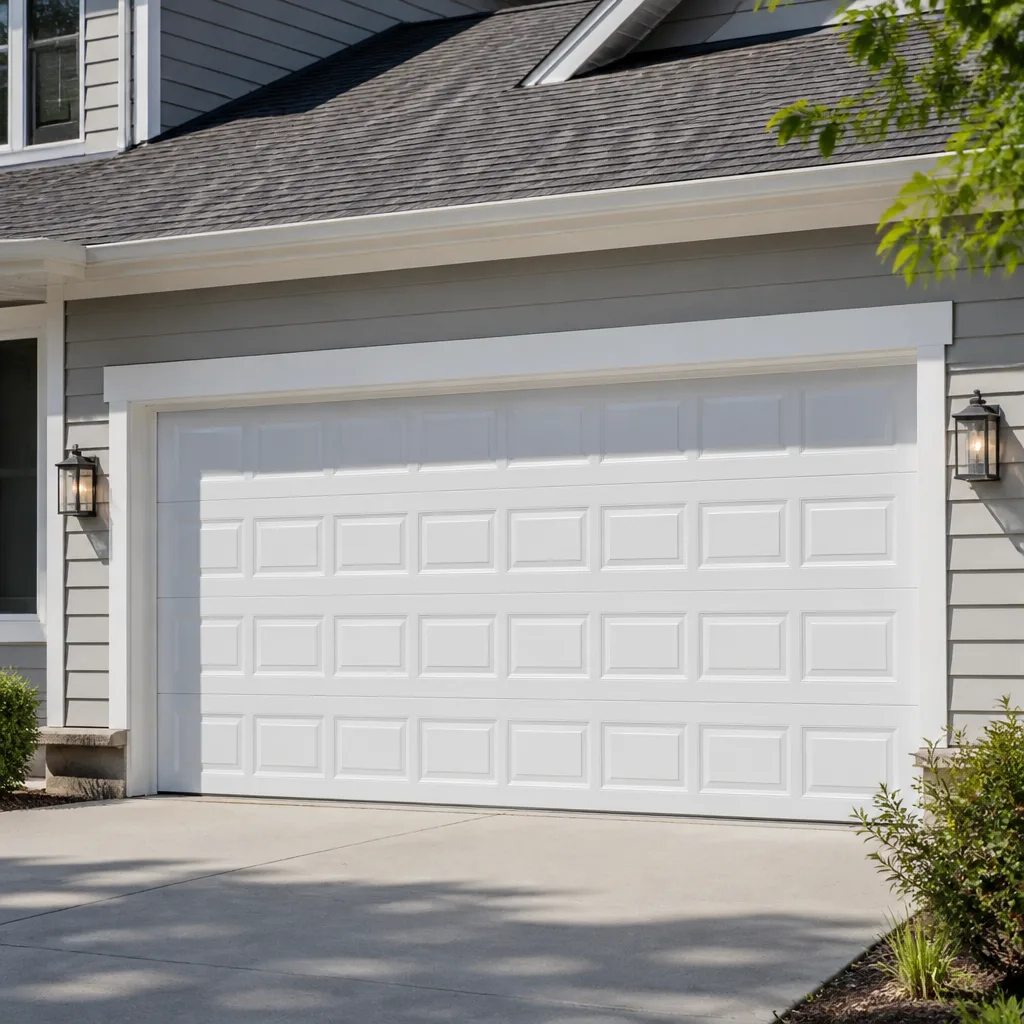 Raised-panel steel
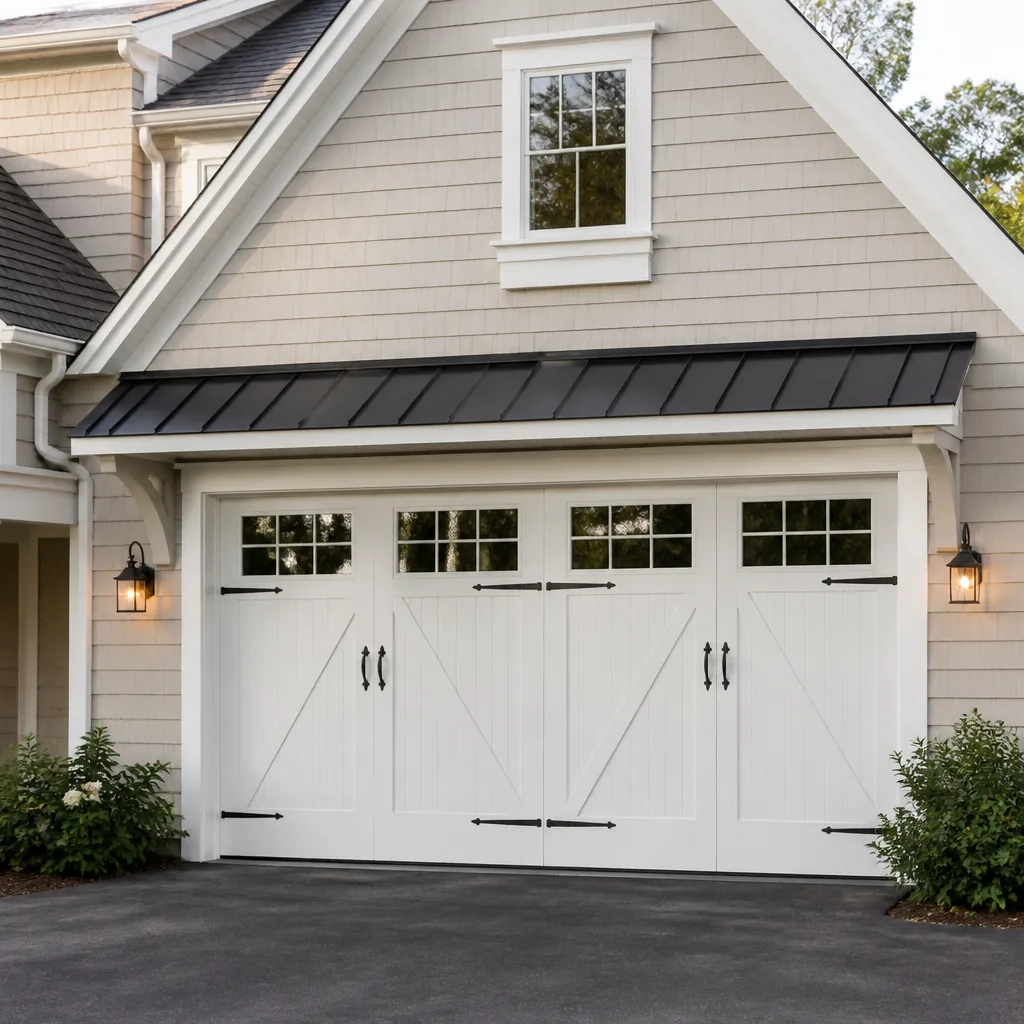 Carriage house
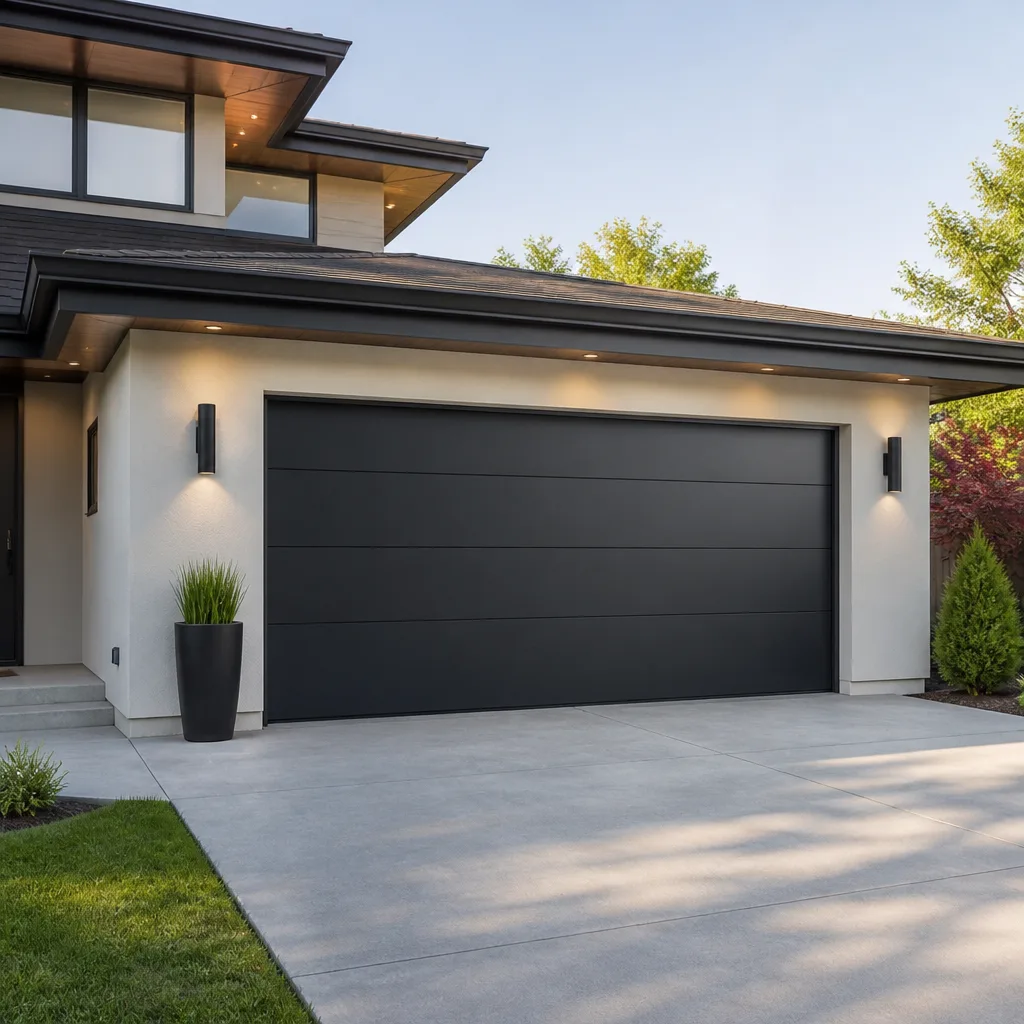 Modern flush
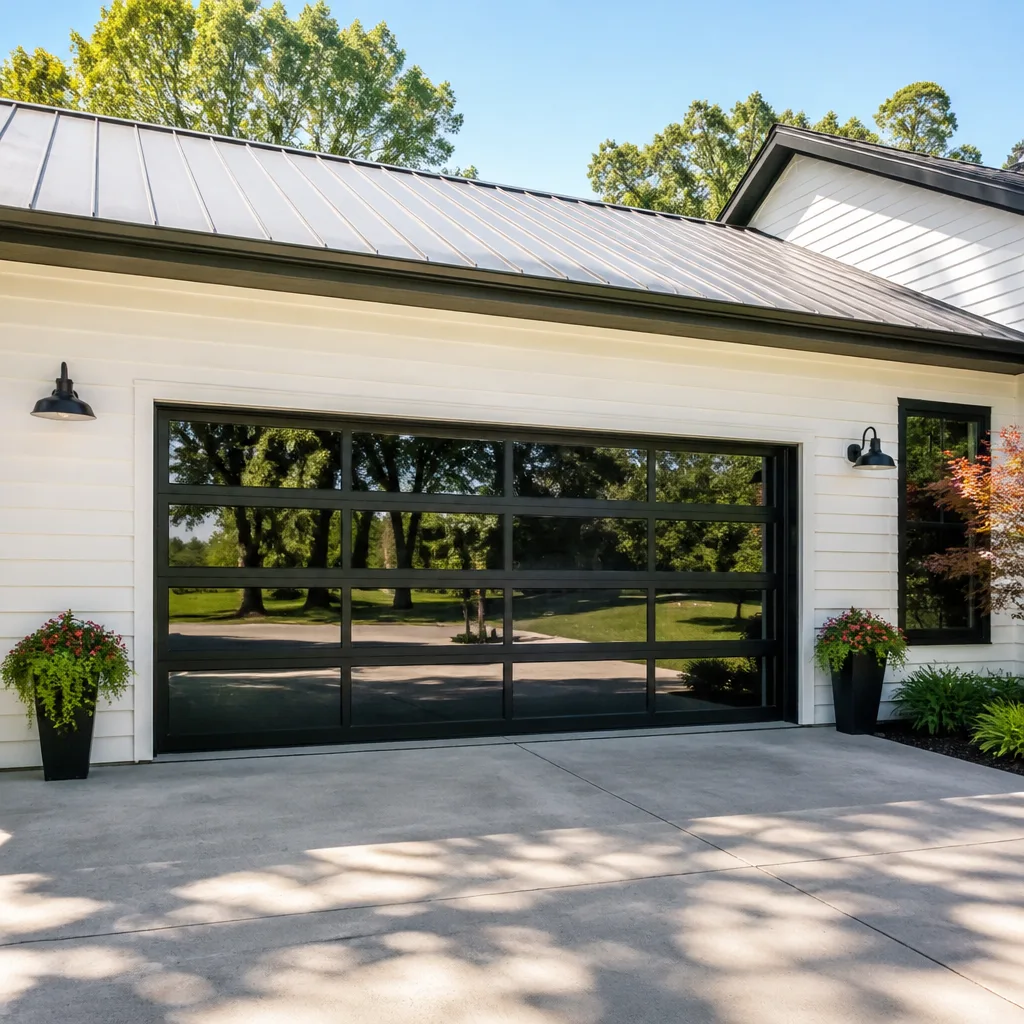 Full-view glass
 LiftMaster openers
 Chamberlain openers
Full 25-point door and opener safety check with every visit - springs, cables, rollers, tracks, and your LiftMaster or Chamberlain opener included
You get a price before we start. It does not change when the pro arrives.
Get your free estimateGarage Door Emergency Preparedness Guide for Centennial Homes
Most homeowners treat a broken garage door as an annoyance to deal with in the morning. In Centennial, that assumption gets expensive. When a torsion spring snaps at 10 PM during a January cold snap, the door becomes physically too heavy to lift by hand, your car may be trapped inside, and the garage temperature can fall toward freezing within a couple of hours. The first 15 minutes after that bang decides how the rest of the night goes. This guide walks through the moves that actually help, the ones that create a false sense of security, and what to say when you call for help. It’s written for Centennial homes and the specific winter conditions they face.
Quick Answer
A garage door emergency in Centennial is a two-part problem: safety and warmth. If a spring has failed, don’t try to force the door up alone; disengage the opener and lift with two people, or leave it closed. If the door won’t close, secure the opening with a physical brace before worrying about the car. Then call a garage door specialist, describe the symptom and the brand, and let a trained technician handle the spring or cable work. Springs are the highest-stakes repair on any garage door and are not a DIY job.
Styles & brands we work with
- Raised-panel steel
- Carriage house
- Modern flush
- Full-view glass
- LiftMaster openers
- Chamberlain openers
Table of Contents
- Why Garage Door Emergencies Hit Centennial Homes Differently
- The First 15 Minutes: What to Do Before You Call Anyone
- How to Manually Disengage and Operate a Door With a Broken Spring
- Emergency Security When Your Door Won’t Close: What Works and What Doesn’t
- What to Tell an Emergency Garage Door Service When You Call
- The Centennial Winter Scenario: Pipes, Temperature, and an Exposed Garage Overnight
- “Permanent Fix Tonight” vs. a Safe Temporary Repair
- Preparing Your Door Before the Next Emergency
Why Garage Door Emergencies Hit Centennial Homes Differently
Centennial sits at about 5,800 feet on the south Denver metro plain, and that elevation changes how a garage door fails. The temperature swings here are wide: a mild afternoon can drop thirty degrees or more by midnight, and the metal components on a door expand and contract with every swing. Torsion springs, cables, hinges, and rollers all live under constant load, and repeated thermal cycling accelerates fatigue. A spring that’s been quietly weakening for months tends to give out on the coldest night of a cold snap, not on a comfortable Tuesday in May.
Homes across Centennial – from the older ranch houses near Cherry Creek State Park to the newer builds out toward Dove Valley and the Southglenn area – share the same basic door architecture. Most have a single overhead sectional door with a torsion spring assembly above the header. Some older properties still run extension springs along the sides. Both fail, and both fail in the same season.
The Centennial-specific part isn’t the door. It’s what happens to the house after the door fails. A garage attached to the living space is a thermal buffer. When the door stays open or can’t close, that buffer disappears. Heat escapes. The water line running through or along the garage wall is now exposed to outside air. In a hard January cold snap, that’s a pipe-freezing event waiting to happen, and it unfolds faster than most homeowners expect.
There’s also a security dimension. An open garage in a Centennial subdivision is visible from the street, and depending on the layout, may give access to a connecting door into the house. That’s the reason a door that won’t close is a two-hour priority, not a next-morning one.
The First 15 Minutes: What to Do Before You Call Anyone
What you do in the first 15 minutes after a garage door failure determines whether the rest of the night is manageable or chaotic. The instinct to force the door up or down is almost always the wrong move. A door with a broken spring is unbalanced, and a door with a snapped cable can drop without warning. Your job in those first minutes is to assess, secure, and stop.
- Stop pressing the opener button. Once you hear the snap or the door stops mid-travel, don’t keep cycling the opener. A strained opener motor can burn out, and a partially open door under a broken spring can slam shut without warning.
- Look, don’t touch. Check whether the door is fully open, fully closed, or stuck mid-position. Check whether the spring above the door looks intact or has a visible gap. Check whether the cables are still wound on the drums or hanging loose. Don’t reach up and grab anything.
- Clear the area. Move kids and pets out of the garage. If the door is partially open, don’t walk under it. If it’s fully closed and stuck, keep people away from the tracks.
- Decide: leave it closed or secure the opening. If the door is fully closed and staying put, that’s the safest position. If it’s open and won’t close, move to the security section below and brace the opening.
- Check the temperature. If the garage is attached and the door can’t close, note the outside temperature. If it’s below freezing or heading there, plan for pipe protection before you do anything else.
- Call a garage door specialist. Have the brand, the symptom, and the door’s position ready. That’s covered in detail below.
One thing that’s easy to miss: don’t try to reset the opener by unplugging and replugging it more than once. If the door’s mechanicals are broken, a reset will only strain the motor again. The opener is not the problem here.
How to Manually Disengage and Operate a Door With a Broken Spring
You can manually disengage a garage door from its opener with the pull cord, but a door with a failed spring is too heavy and too dangerous for one person to lift. The pull cord releases the door from the opener’s carriage so the door can move independently. It does not make the door lighter. With a broken torsion or extension spring, the door’s full weight is now on you, and on a standard door that’s more than one person can safely control. The following is the general procedure and the safety reasoning behind it, not a DIY repair guide.
What the manual release does and doesn’t do
The red pull cord hanging from the opener’s rail disconnects the door from the motorized carriage. Once pulled, the door moves freely on its tracks. That’s useful when the opener has failed but the door’s mechanicals are intact. It is not useful when a spring has snapped, because the spring is what counterbalances the door’s weight. Without it, the door is dead weight on the tracks.
The two-person rule for a failed spring
If you must move a door with a broken spring – typically because a car is trapped and there’s a real reason to get it out – use two people. One person lifts from the bottom center of the door, using both hands, with feet clear of the door’s path. The second person controls the door’s descent and spots for obstructions. Lift slowly, stop at the halfway point, and never let go. If the door starts to fall, step back; don’t try to catch it. If there’s any doubt, leave the door closed and wait for a technician.
What not to do
- Don’t try to rewind, adjust, or remove a torsion spring yourself. Torsion springs are under extreme tension and can cause serious injury.
- Don’t cut or unhook a cable. A released cable can whip with force.
- Don’t prop a partially open door with a broom handle or a chair. It can drop.
- Don’t stand under or beside the tracks while the door is moving.
- Don’t let anyone, especially a child, try the pull cord “to see what happens.”
If the door has a broken spring, the right move is almost always to leave it closed and call for garage door repair. Springs are the one part of this system where the safety margin is too thin to experiment. A technician arrives with the right tools, the right spring for the door’s weight and cycle rating, and the training to handle the tension safely.
Emergency Security When Your Door Won’t Close: What Works and What Doesn’t
When a garage door won’t close, the priority shifts from getting the car out to keeping the house secure. A door stuck open is a visible opening on your Centennial street, and depending on your floor plan, it may be a direct path into the home through the connecting door. You need a temporary measure that physically blocks the opening and holds up overnight. Skip the ones that only look like they work.
Temporary measures that actually help
- Brace the door with a heavy object at the base, inside the garage. A vehicle parked against the door’s lower panel, or a stack of heavy boxes braced against the bottom edge, prevents the door from being lifted from outside. Make sure the object doesn’t block your own exit.
- Lock the interior deadbolt on the connecting door. If your house door has one, use it. That’s the real security line.
- Use a manual slide lock if the door has one. Many sectional doors have a slide bolt that engages the track. If yours does, engage it from inside.
- Turn on exterior lights and leave them on. Visible lighting deters opportunistic entry better than almost anything else at night.
Measures that create a false sense of security
- A zip tie or bungee cord across the tracks. These look like they secure the door but snap or slip under any real force. They also create a trip hazard and can damage the tracks.
- Taping the door closed from the outside. Cosmetic only. Adhesive won’t hold a sectional door against a lift.
- Wedging a chair or a ladder under the door panel. It can slide out. A door coming down on a wedged object can bend panels or damage the opener carriage.
- Leaving the door partially open “so it doesn’t look suspicious.” An open door is exactly what draws attention.
If your door won’t close and the opening is exposed, tell the dispatcher that when you call. It changes the priority of the visit. In Centennial, a door that won’t close overnight in cold weather is treated as a genuine emergency, and Centennial Garage Door Repair Pros offers emergency garage door service as a core part of what we do, not a premium add-on.
What to Tell an Emergency Garage Door Service When You Call
The single most useful thing you can do when you call is describe the symptom and the brand. That’s what gets a technician to your door faster and better prepared. Garage door systems diagnose differently by brand, and a technician who knows whether they’re walking into a LiftMaster, Chamberlain, Genie, Clopay, Amarr, Wayne Dalton, Craftsman, or Raynor system arrives with the right parts logic in mind rather than guessing on site.
Have this ready before you dial
- The brand of the door and the opener. Look at the opener motor housing and the door’s end stiles or bottom bracket. Wayne Dalton and Craftsman doors, for example, have distinct hardware patterns that change how a technician approaches the job.
- The symptom, in plain words. “Loud bang and the door won’t lift” points to a spring. “Door goes up a foot and stops” points to an opener or sensor issue. “Door is crooked and one cable is loose” points to a cable or drum failure.
- The door’s current position. Fully closed, fully open, or stuck mid-track. This is safety-critical for the technician.
- Whether the door is attached to the house. Attached garages in Centennial are the ones with the pipe-freezing and security concern; detached garages are a different priority.
- Whether anything is trapped. A car inside is common and worth mentioning, but it doesn’t change the safety sequence.
- Whether the door is exposed to the street or secured. Tell them if you’ve braced it or if the opening is still visible.
Give the dispatcher a callback number and a clear address. In Centennial, giving the nearest cross street helps the technician route around I-25 and Arapahoe Road congestion, which can add real minutes on a weekday evening.
The Centennial Winter Scenario: Pipes, Temperature, and an Exposed Garage Overnight
If your garage door can’t close on a below-freezing night in Centennial, the pipe running through the garage wall is the thing to think about before the car. A garage attached to the house is a thermal buffer, and when the door is stuck open, that buffer is gone. Heat leaks out, the garage temperature drops toward the outside air temperature, and any water line running through the garage or along an exterior wall inside it is now exposed to sustained cold.
What to do tonight
- Trickle water at the nearest faucet. A slow, steady drip keeps water moving through the line, which reduces the chance it freezes in place. Do this at the fixture closest to the exposed wall.
- Open the cabinet doors under that sink if the line runs through a cabinet against a garage wall, so warm interior air reaches the pipes.
- Close the interior door between the house and garage and seal gaps around it with a towel if you can. Every degree you keep in the house helps.
- Don’t run a space heater in the garage unattended. If you use one, keep it away from the door, the tracks, and anything flammable, and don’t leave it on overnight in an enclosed space.
- Brace the door closed if possible. A door that’s held closed by a vehicle parked against it holds more heat than an open one, even with a gap.
If the door can’t be closed at all and the forecast is well below freezing, a temporary exterior tarp secured across the opening cuts wind exposure. It’s not airtight, but it’s better than nothing. And if you do end up with a frozen pipe, shut off the main water supply and call a plumber; that’s a separate call from the garage door.
Once the door is fixed, talk to the technician about whether the door’s weather seal and bottom threshold are intact. A worn bottom seal lets cold air in all winter, every winter, not just on the night of the emergency. That’s a cheap fix and a real comfort improvement for Centennial homes.
“Permanent Fix Tonight” vs. a Safe Temporary Repair
Not every emergency can be permanently fixed the same night, and a company that promises it can is worth a second look. A broken torsion spring can usually be replaced on the spot if the technician arrives with the right spring for the door’s weight and cycle rating. A bent track, a snapped cable on certain door styles, or a damaged bottom section may require a return visit with the right parts. That’s normal. The question is whether the temporary repair is safe and whether the price is quoted before work starts.
Safe temporary repair looks like this
- The technician explains exactly what’s broken and what’s safe to do tonight.
- You get a written or clearly stated price for the emergency visit before any work begins.
- If a part has to be ordered, you’re told the timeline and the price of the return visit up front, not after.
- The door is left in a safe, stable position, even if it can’t be fully restored that evening.
Language that signals an overcharge situation
- “The price depends on what we find.” That’s fine as a statement about a diagnosis, but not as a substitute for a quote before work starts. The price you’re quoted and agree to is the price.
- “We have to replace the whole door.” A failed spring is almost never a reason to replace a door. Same door, fixed right, is usually the right answer.
- “This is a special emergency rate.” A higher rate for after-hours emergency work is normal and should be stated up front. A vague “emergency rate” applied after the work is done is not.
- “We can’t tell you the price until we’re done.” Anyone who won’t give you a number before starting is telling you something.
Our rule is simple: we quote the price and agree it with you before any work starts. If a technician can’t fix something tonight, we say so, explain what the safe temporary option is, and schedule the permanent fix. That’s the honest version of emergency service, and it’s the one Centennial homeowners deserve at 11 PM.
Preparing Your Door Before the Next Emergency
The best time to prepare for a garage door emergency is the week before it happens, and most of that prep is a 20-minute walk-through. Older torsion springs on high-cycle doors – doors opened and closed several times a day – have a finite lifespan. A spring nearing the end often gives warning: the door lifts unevenly, the opener strains, or the door feels heavier than it used to. Catching that in daylight is far better than catching it at 10 PM in January.
Your 20-minute pre-winter check
- Look at the springs. A healthy torsion spring is a tight, continuous coil. A visible gap means it’s failed and needs replacement before the door is used.
- Test the balance. Disengage the opener, lift the door to halfway, and let go. A balanced door stays put. A door that drops fast or rises on its own is under the wrong tension and needs a technician.
- Check the bottom seal. A cracked or missing bottom seal lets cold air in all winter. Replace it before the first hard freeze.
- Test the safety reverse. Put a roll of paper towels under the door and close it. The door should reverse on contact. If it doesn’t, that’s an opener adjustment, and it’s a real safety issue.
- Lubricate the moving parts. Rollers, hinges, and the opener’s rail get a light application of proper garage door lubricant, not WD-40, which attracts dust.
- Locate the manual release. Make sure every adult in the house knows where the red pull cord is and what it does. When a door won’t open and you can’t wait, that cord is the first thing you’ll need.
- Save a number. Have a garage door company’s emergency number on the fridge or in your phone before you need it. Trying to find one at 11 PM on a frozen night is its own emergency.
When you do need an emergency call, describe the opener brand accurately. If you’re not sure, a photo of the motor housing and the door’s hardware is enough for a trained eye. Centennial Garage Door Repair Pros works on LiftMaster, Chamberlain, Genie, Clopay, Amarr, Wayne Dalton, Craftsman, and Raynor equipment, and that brand familiarity shortens the diagnosis, which shortens the visit.
Common Mistakes to Avoid
- Forcing the door up by hand alone with a broken spring. The door is unbalanced and much heavier than it feels. Use two people or leave it closed; one person lifting an unbalanced sectional door can be seriously hurt.
- Cycling the opener repeatedly to “see if it resets.” A strained opener motor can burn out, turning a spring repair into a spring-and-opener repair.
- Securing an open door with zip ties or tape. These look like security but snap under any real force. Brace the door with weight or a vehicle instead.
- Waiting until morning on a below-freezing Centennial night. If the garage is attached and the door can’t close, pipe exposure is a real risk. Trickle the water and brace the door tonight.
- Accepting work without a quoted price first. A legitimate emergency service quotes and agrees the price before starting. A vague “we’ll figure it out after” is a red flag.
- Not knowing the door or opener brand. Diagnosing a Wayne Dalton or Craftsman door is faster when the technician knows what they’re walking into. Check the housing before you call.
- Letting kids or pets near the tracks during the emergency. A partially open door with a failed spring can drop without warning. Keep the area clear until the technician arrives.
See the difference
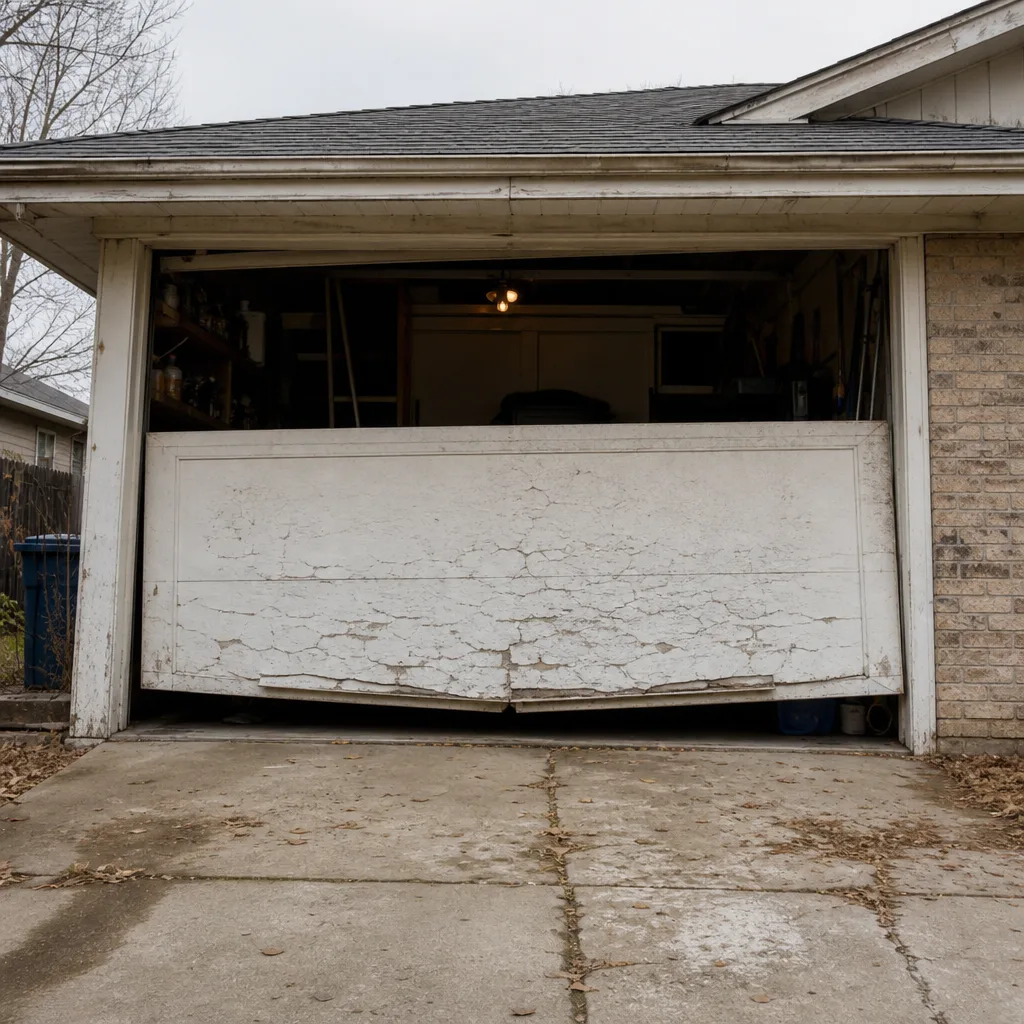 Before
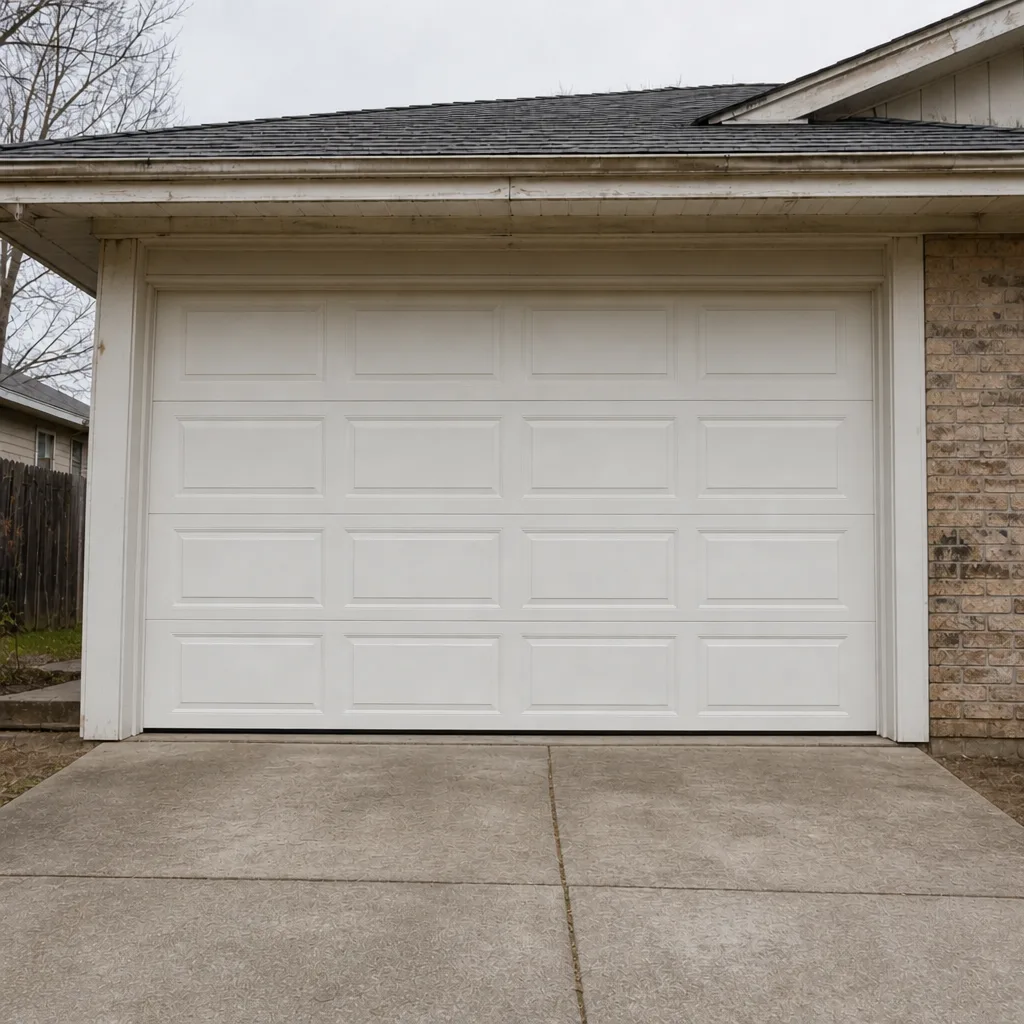 After
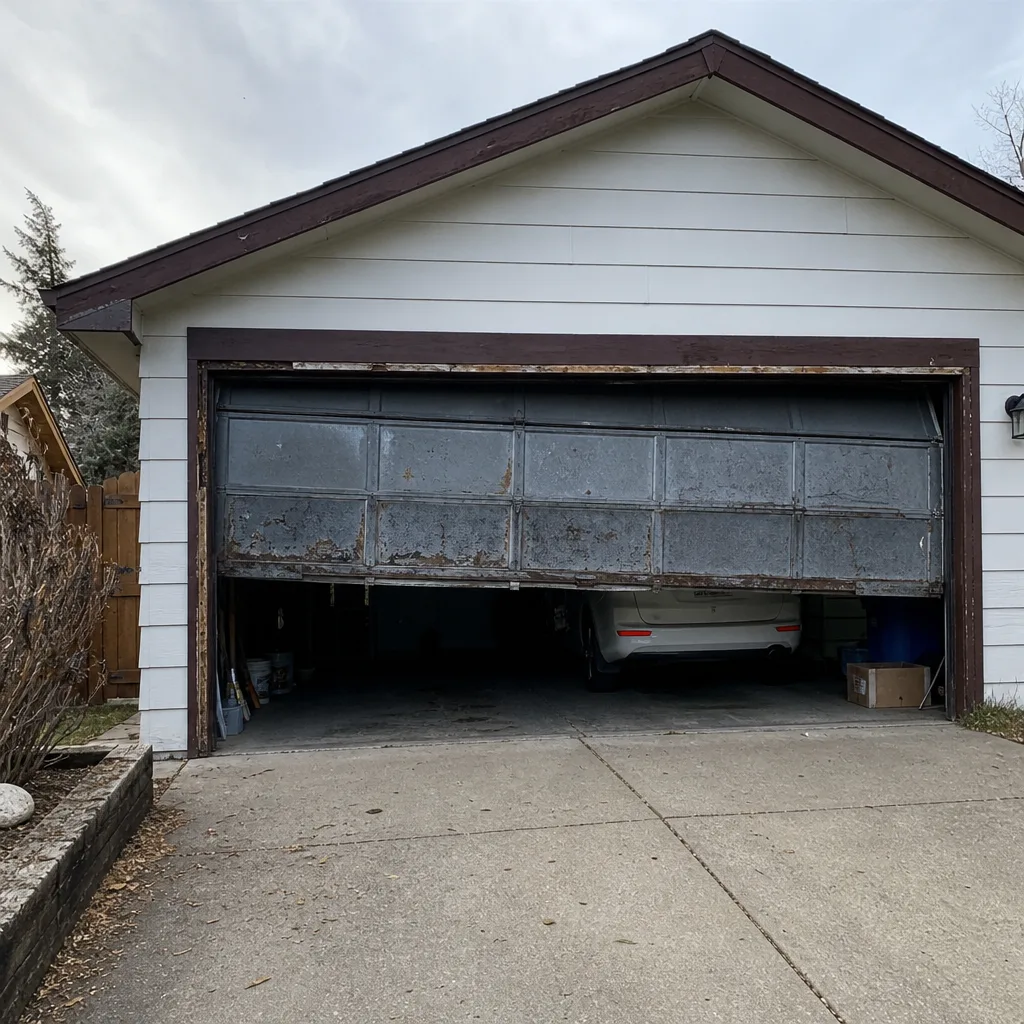 Before
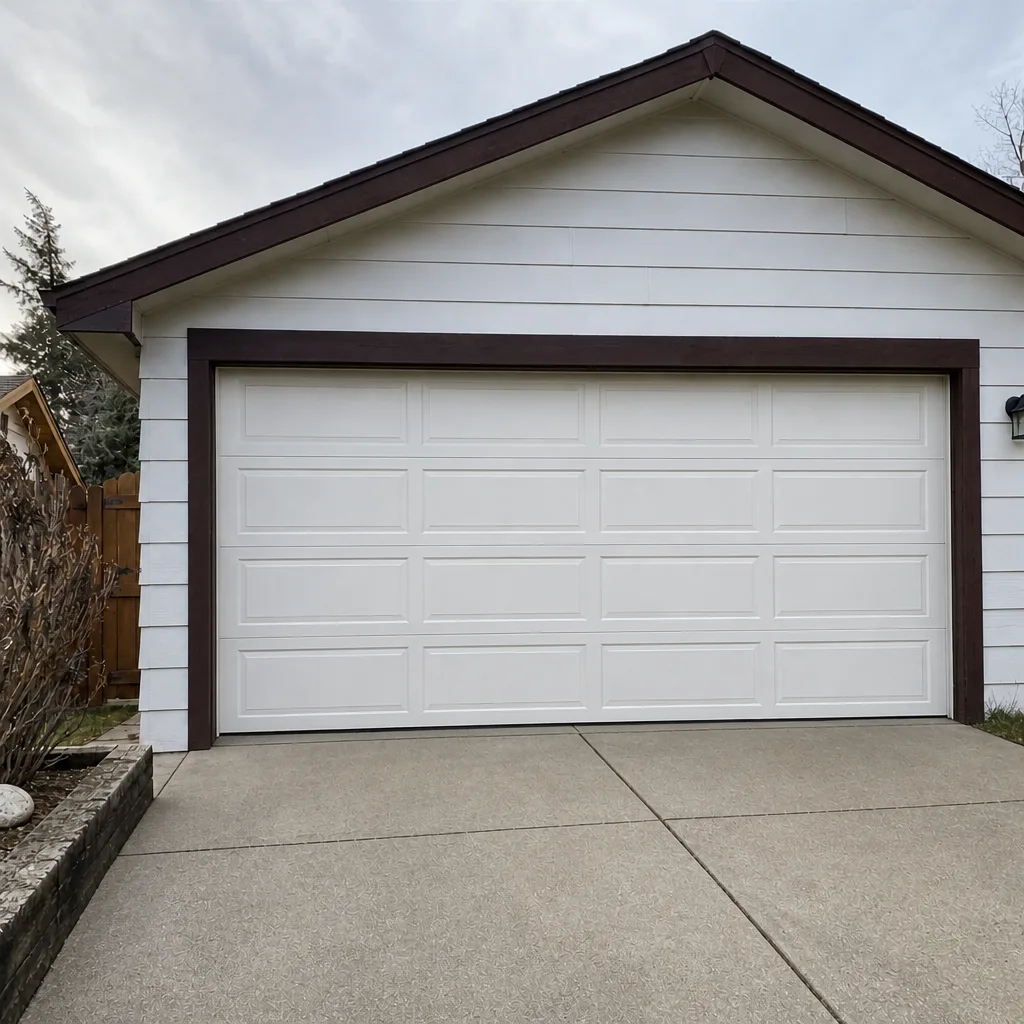 After
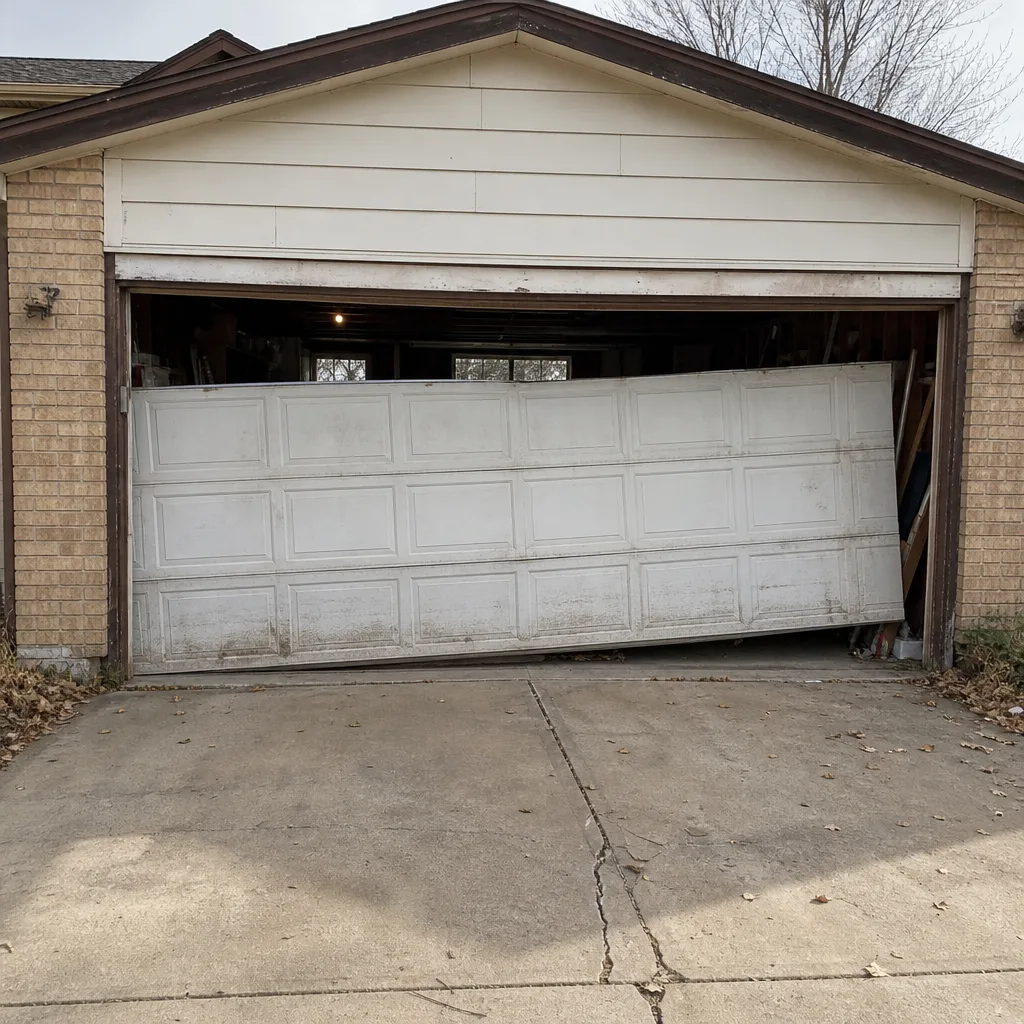 Before
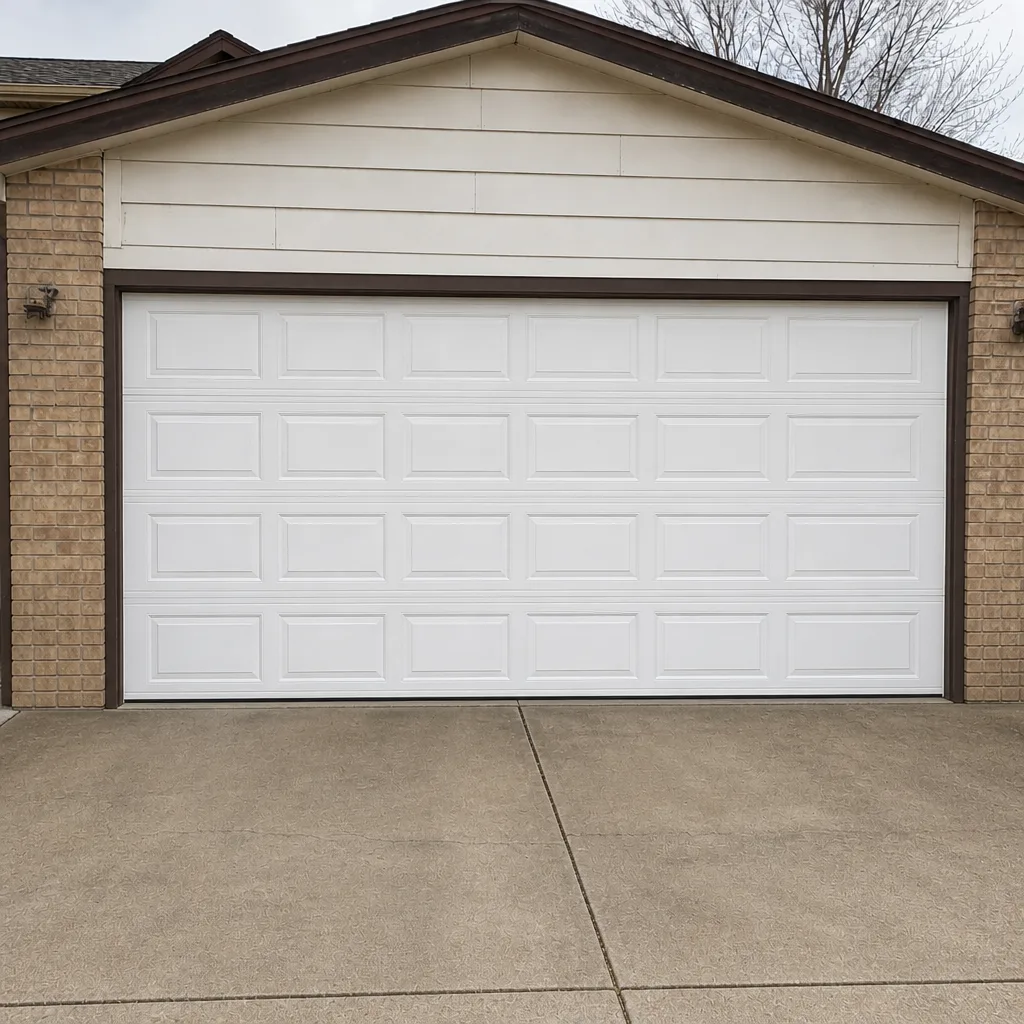 After
When to Call a Professional
Call a professional the moment you hear a loud snap from the garage, see a visible gap in a torsion spring, or find a cable hanging loose from the drum. Those are the failures that make a door dangerous to touch, and they’re not repairs to attempt yourself. Call if the door won’t close and the garage is attached to the house on a night below freezing, because pipe exposure is time-sensitive. Call if the door is stuck mid-track and blocking a car you need. Call if you’ve already tried the manual release and the door is still too heavy to move safely. And call if a previous repair left the door crooked, noisy, or hard to lift. Centennial Garage Door Repair Pros offers free estimates in Centennial – call (877) 542-4141.
If you’re already planning ahead, our garage door opener repair page covers the motorized side, and garage door installation covers replacement for doors that are past saving.
Frequently Asked Questions
An emergency garage door repair in Centennial typically runs more than a scheduled repair because of the after-hours trip, and the written quote you agree to before work starts sets the final price. A spring replacement is the most common emergency call, and a matched pair of springs costs about twice a single spring because they’re replaced together. Call (877) 542-4141 for an exact quote, and estimates are free.
Yes. A door that won’t close is the priority case for emergency service, especially in Centennial winter weather. Call (877) 542-4141 and describe the symptom and brand; that gets a technician to you faster and better prepared.
No. We quote the price and agree it with you before any work starts. If a diagnosis reveals something different once we’re on site, we explain it and get your agreement on any change before we do the work, and you always have the option to stop and schedule a daytime visit instead. Call (877) 542-4141 to get a free estimate.
Stop using the opener, keep people away from the door, and leave it closed if it’s fully down. Don’t try to lift an unbalanced door alone. If the garage is attached and the door can’t close, trickle the nearest faucet and brace the opening against the street. Then call (877) 542-4141 for emergency service.
The local professionals we connect you with are licensed and insured as their state requires, and spring and cable work is in scope for them, including the highest-stakes repairs most companies hesitate to advertise. Call (877) 542-4141 to schedule a free estimate.
No. Torsion springs are under extreme tension and can cause serious injury if handled without the right tools and training. Extension springs carry similar risk when they release. Leave spring work to a trained professional. Our technicians have up to 9 years of experience, and a failed spring is usually fixed the same day once we’re on site. Call (877) 542-4141.
The Bottom Line
A garage door emergency in Centennial is a race between cold air and your house. In the first 15 minutes, stop pressing the opener, clear the area, and decide whether the door is safer closed and braced or open and exposed. Don’t try to lift an unbalanced door alone, and don’t secure an open door with zip ties or tape. Call with the brand and the symptom so the right technician arrives prepared. And when you do call, insist on a quoted price before any work begins. Same door, fixed right, with a plan for next time – that’s the version of preparedness that actually works.
When your door won’t open and you can’t wait, one call covers it. Whether it’s a snapped torsion spring, a stuck opener, or a door that won’t close on a January night, Centennial Garage Door Repair Pros offers free estimates and emergency garage door service in Centennial. Centennial Garage Door Repair Pros handles repair, opener repair, spring repair, installation, and emergency service on the major brands, and every quote is agreed before the work starts.
Call (877) 542-4141 for a free estimate. Estimates are free, the price is quoted and agreed before any work begins, and a written estimate sets the final price.
Written by the team at Centennial Garage Door Repair Pros.