Last updated November 22, 2026
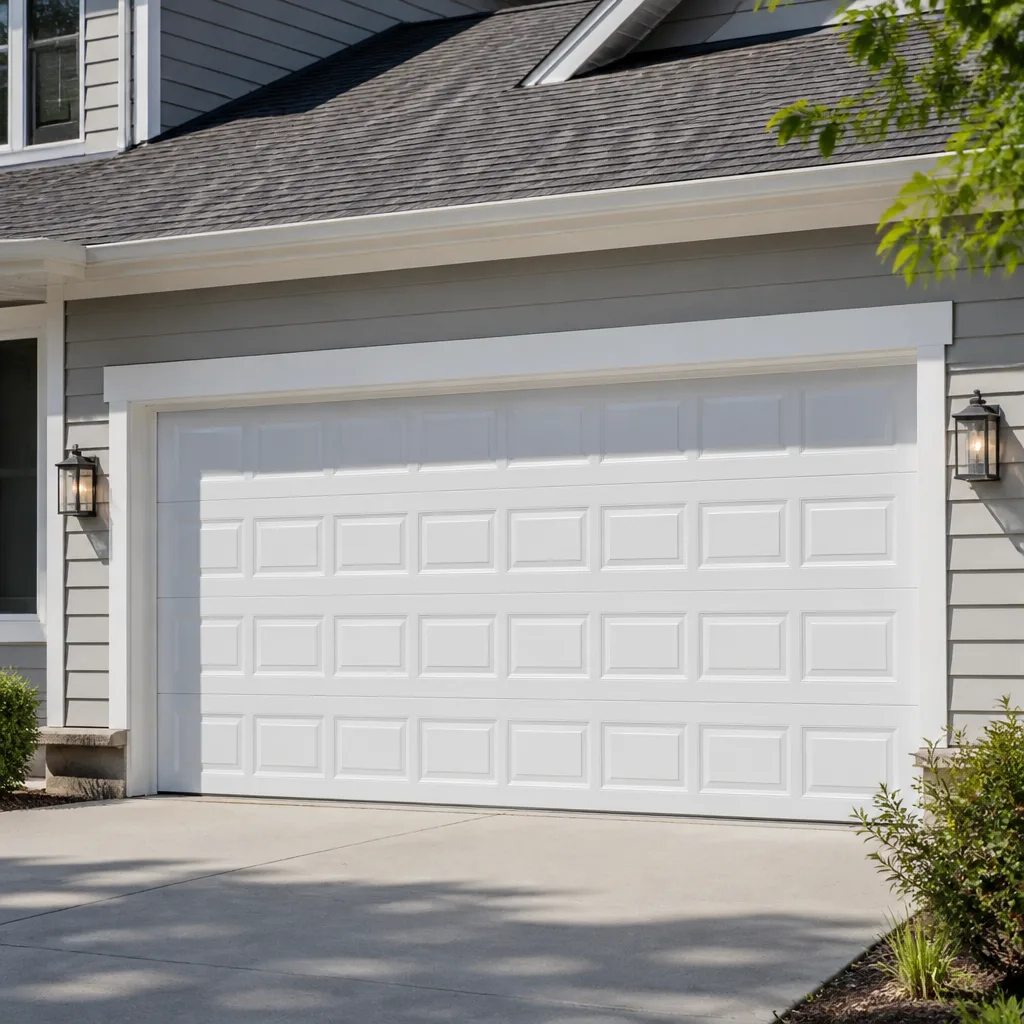 Raised-panel steel
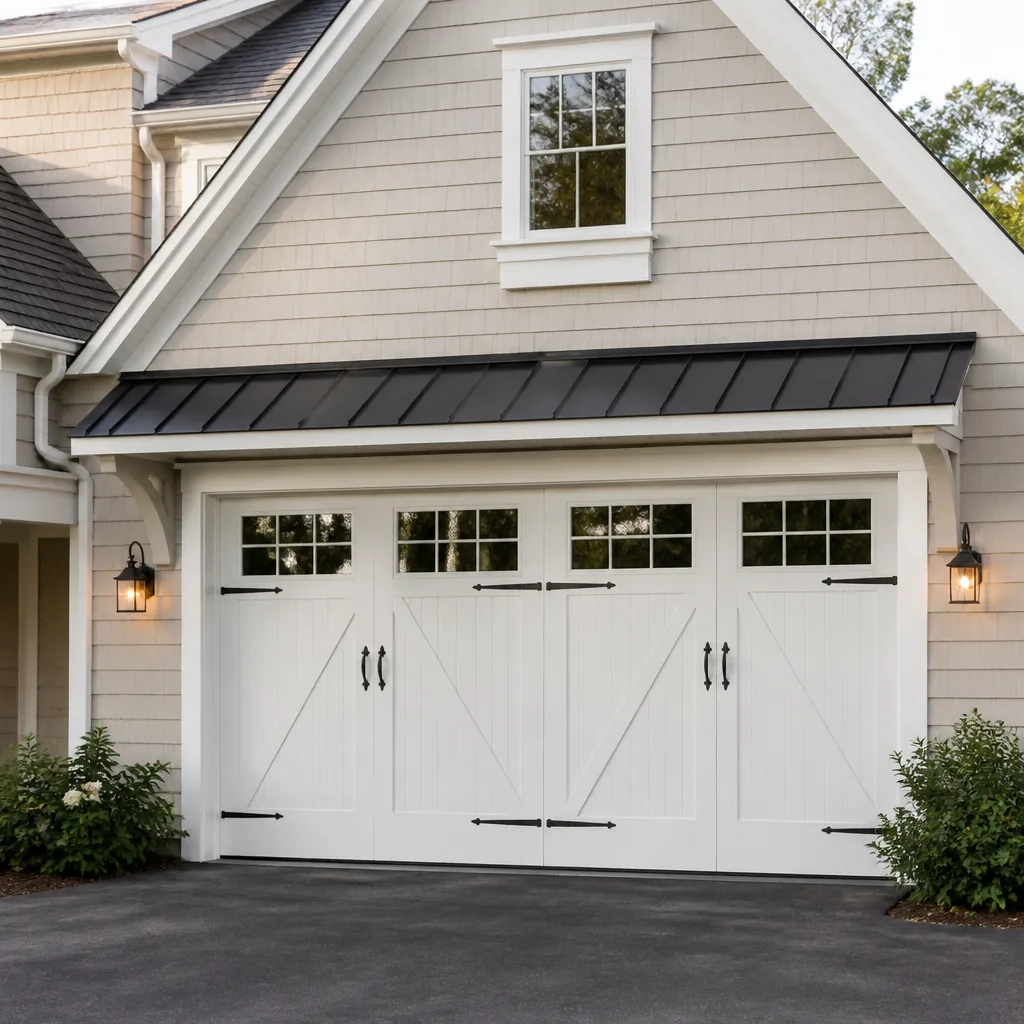 Carriage house
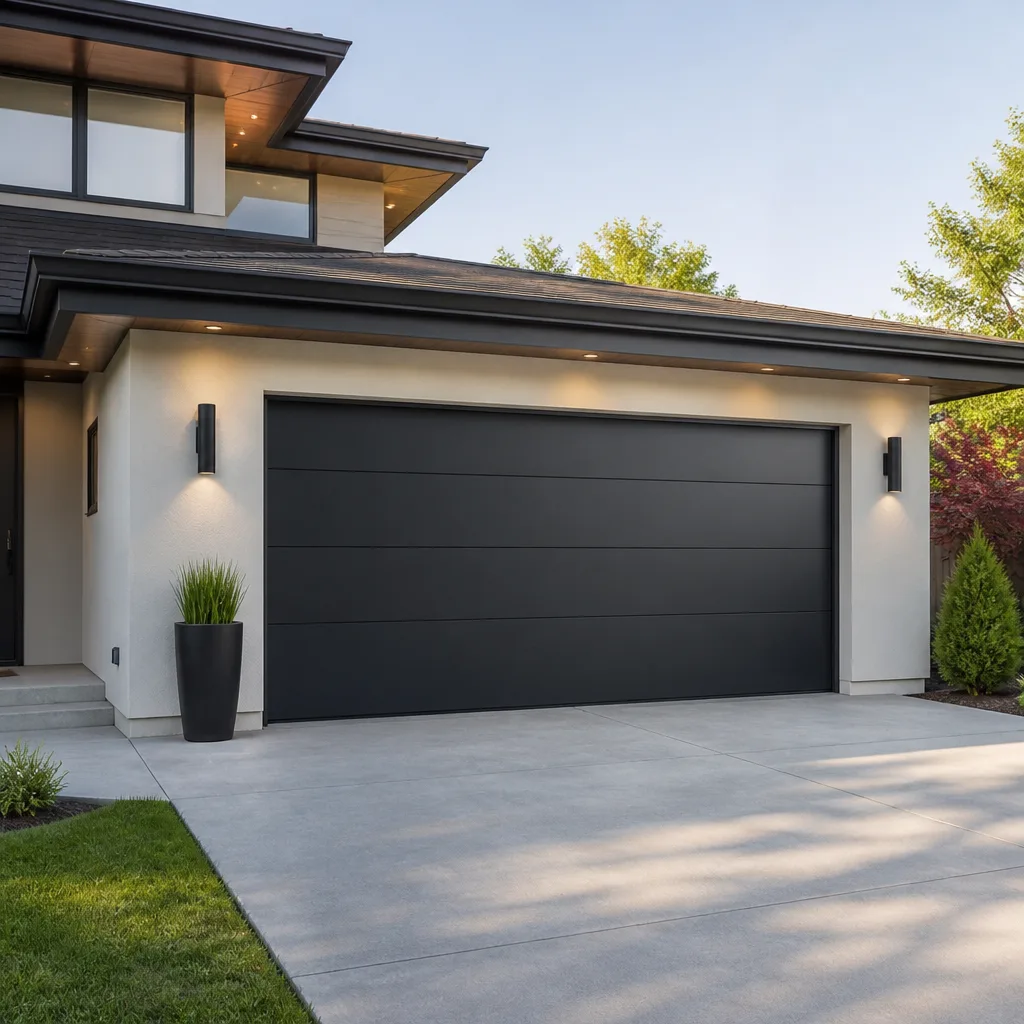 Modern flush
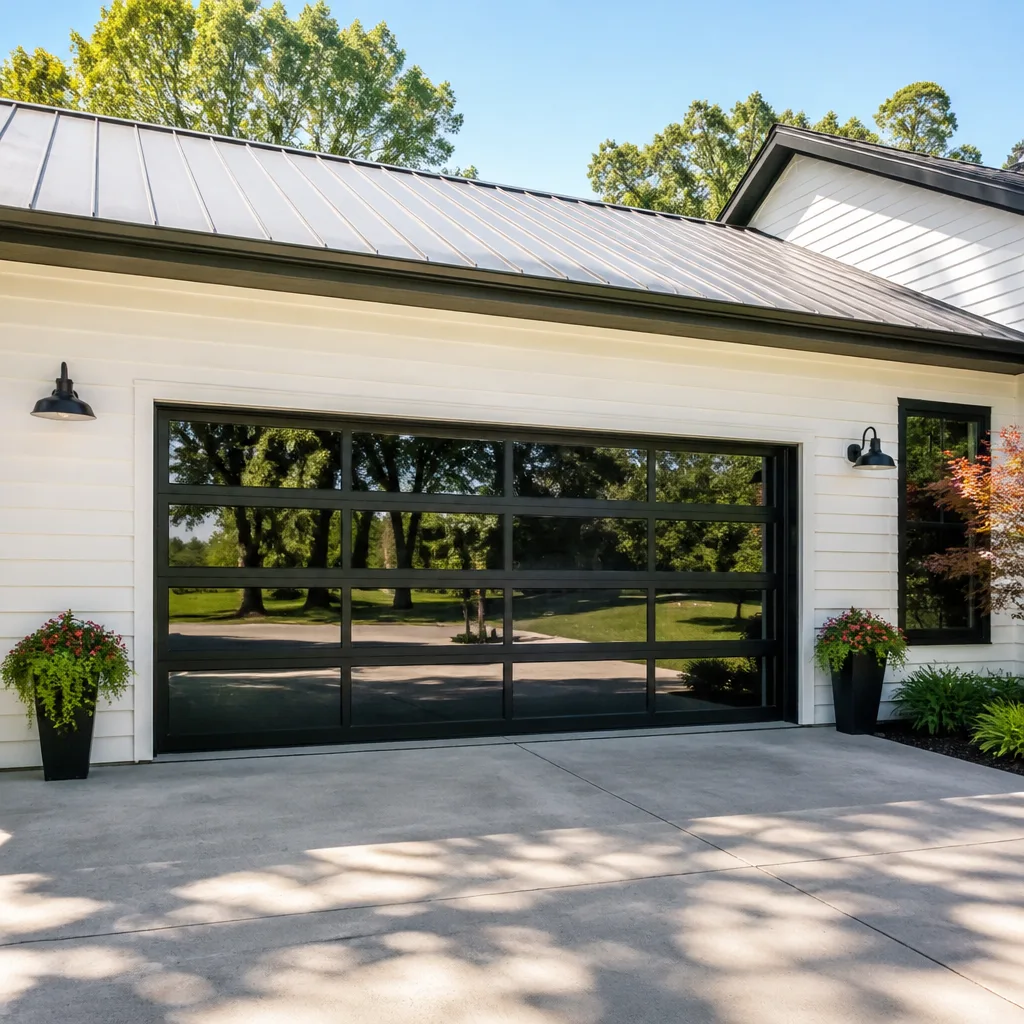 Full-view glass
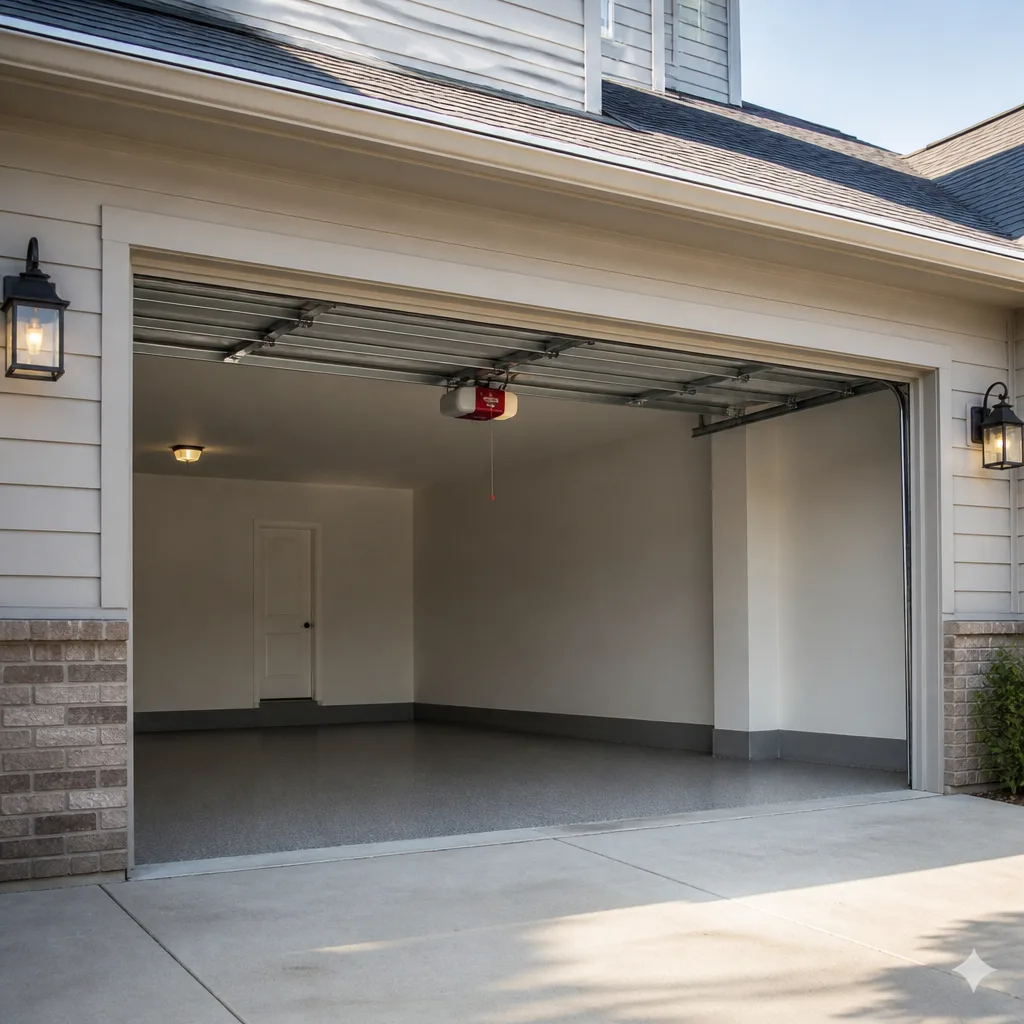 LiftMaster openers
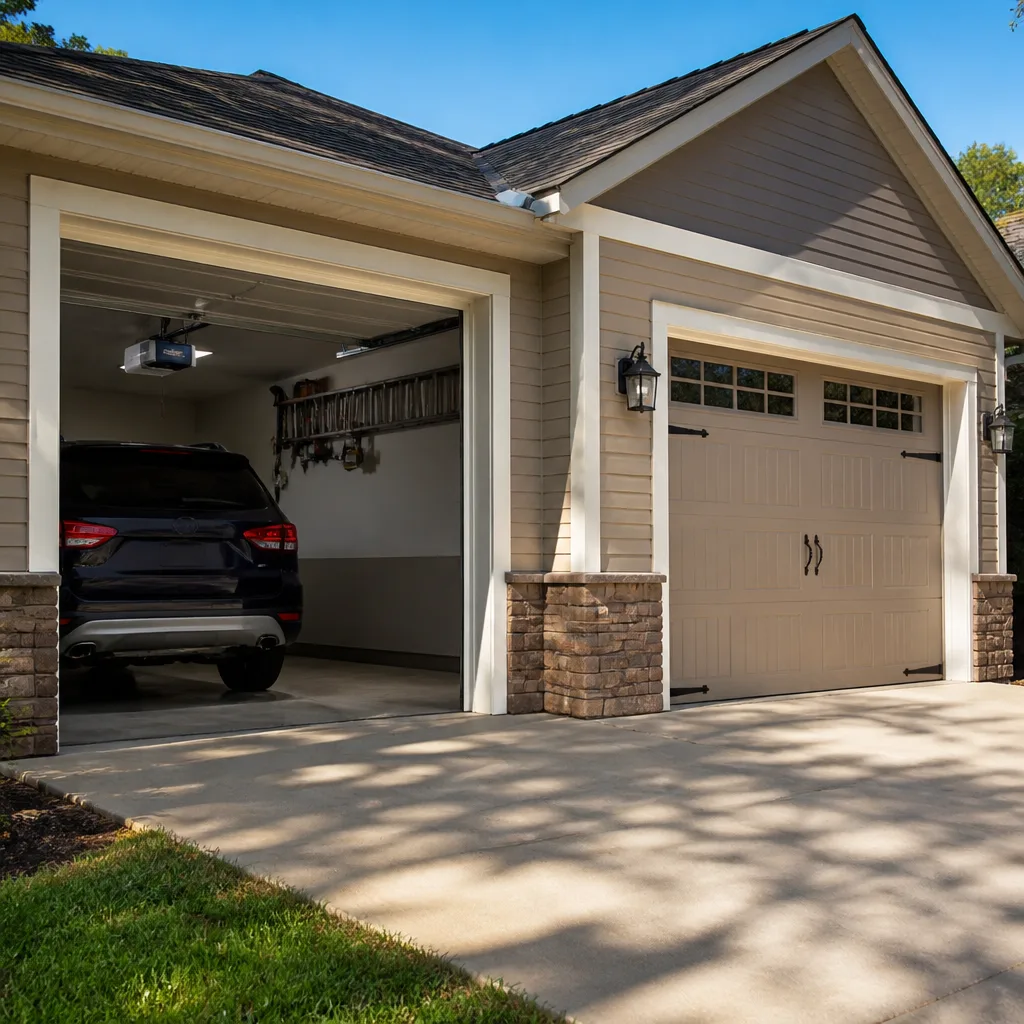 Chamberlain openers
Full 25-point door and opener safety check with every visit - springs, cables, rollers, tracks, and your LiftMaster or Chamberlain opener included
You get a price before we start. It does not change when the pro arrives.
Get your free estimateGarage Door Repair Troubleshooting in Centennial: Common Problems and How to Fix Them
A door that reverses before it hits the floor looks like a sensor problem. Nine times out of ten in Centennial homes, it’s a limit switch that needs adjusting or a spring that’s lost tension, and cleaning the sensors first just burns 45 minutes before you get to the real cause. That’s the trap with garage door troubleshooting: the symptom you see is almost never the part that’s broken. A door that grinds, drags, reverses, or refuses to open in the cold is telling you which mechanical system has failed, but you have to read it correctly. This guide maps every common symptom back to the component actually responsible, so you fix the right thing the first time instead of guessing at the one that’s easiest to reach.
Quick Answer
Most garage door problems in Centennial trace back to four systems: springs that have lost tension, opener logic and limit switches that are out of adjustment, tracks and rollers that are misaligned or worn, and safety sensors that are dirty or knocked out of line. Diagnosing by symptom-to-system rather than by what looks broken is what separates a 20-minute fix from a wasted afternoon. Springs, cables, and opener internals are not homeowner work; balance, track, and force checks are safe to do yourself before you call.
Styles & brands we work with
- Raised-panel steel
- Carriage house
- Modern flush
- Full-view glass
- LiftMaster openers
- Chamberlain openers
Table of Contents
- The Symptom-to-System Diagnostic Map
- Why Centennial’s Elevation and Temperature Swings Cause False Diagnoses
- The Three Checks You Can Safely Do Before Calling
- The Four Checks That Require a Professional
- Brand-Specific Quirks: Reading the Right Error Code
- When a “Quick Fix” Makes Things Worse
- Why Your Door Won’t Open in Cold Weather
- Repair or Replace? How to Decide
The Symptom-to-System Diagnostic Map
Every garage door failure announces itself through a symptom, and each symptom points at a specific system. Here’s how we read them, and how you can too. Matching the symptom to the system before you touch anything is the single most useful troubleshooting habit you can build.
- Grinding or scraping as the door moves: usually worn rollers, a dry or failing bearing, or a track that’s out of alignment. Grinding that gets louder near the top or bottom of travel often means the track is pinching the rollers.
- Door reverses before reaching the floor: a limit switch out of adjustment, a spring that’s lost tension, or a force setting that’s too sensitive. The sensors are the usual suspect and the least likely culprit.
- A visible gap on one side when closed: a broken or stretched spring on that side, a bent track, or a cable that’s slipped off its drum. A one-sided gap is almost always a mechanical imbalance, not a door that’s “gone crooked.”
- Door won’t open, motor hums but nothing moves: a broken spring, a stripped opener gear, or a manual lock engaged. If the opener strains and stops, suspect the spring or the gear before the motor itself.
- Door opens a few inches then stops: a limit switch set too short, a binding track, or an obstruction the opener reads as resistance.
- Loud bang from the garage, door won’t lift: a torsion spring has snapped. This is the highest-stakes failure on any door, and it’s not a homeowner repair.
Notice that the sensor shows up in only one of these. That’s deliberate. The sensor is the easiest thing to touch, so it gets blamed first, but the mechanical systems do the real work and fail more often. When you repair a garage door in Centennial, diagnosing by symptom rather than by convenience is what keeps the fix on target.
Why Centennial’s Elevation and Temperature Swings Cause False Diagnoses
Centennial sits around 5,800 feet, and that elevation combined with real seasonal temperature swings changes how garage door hardware behaves. A door that works fine in July can act broken in January, and a door that seems sluggish in the heat of summer can look like it needs a new opener when it just needs adjustment. Understanding the local conditions keeps you from misreading a normal seasonal behavior as a failure.
Cold is the big one. Steel contracts in the cold, and so do the springs, tracks, and cables. A torsion spring that holds proper tension at 70°F carries less stored energy at 20°F, so a door that felt perfectly balanced in fall can suddenly feel heavy or fail to lift in a January cold snap. That’s not the spring “breaking” – it’s the spring doing what cold metal does. The fix is usually a tension adjustment, not a replacement, and a technician who works in Centennial regularly knows to check tension against the current temperature before recommending a new spring.
Temperature swings also punish the opener’s force settings. A door that’s perfectly tuned in mild weather can trip its safety reverse in the cold because the whole assembly is stiffer and draws more force to move. Homeowners often read that as the opener “going bad” when it’s really the opener correctly detecting resistance and doing its job.
The dry air at elevation matters too. Low humidity dries out lubricant on rollers, hinges, and bearings faster than in a humid climate, so a door in Centennial can start to squeal or grind sooner than the same door elsewhere. That’s why the dry-air squeal is such a common call here. It’s also why you’ll see us recommend a proper lubricant rather than grease on certain parts – more on that in the quick-fix section.
And the freeze-thaw cycle works on the concrete and the door’s bottom seal. A seal that’s fine most of the year can stiffen and crack after a cold spell, letting in drafts and water. If your door has a gap along the bottom in winter that disappears in spring, the seal’s the issue, not the door’s alignment.
The Three Checks You Can Safely Do Before Calling
There’s real diagnostic value in what a homeowner can check without risk, and it can save you a service call. Here are the three checks we recommend before you pick up the phone. None of them require tools beyond your hands, and none put you near the dangerous parts.
- The balance test. Disconnect the opener by pulling the manual release handle (usually a red cord hanging from the opener rail). Lift the door halfway by hand and let go. A properly balanced door stays where you put it. If it slams down or drifts, the springs are out of balance or losing tension – a strong sign you need spring service.
- The visual track inspection. With the door closed and the opener disconnected, look up the length of both vertical tracks. They should be straight, parallel, and free of dents or bends. Look at the rollers where they sit in the track: if any are cracked or sitting at an angle, that’s your grinding or scraping source.
- The force sensitivity test. With the door connected and the opener running, place a roll of paper towels or a piece of wood flat on the floor in the door’s path and close the door. The door should reverse on contact. If it keeps pressing down, the force setting is too high and needs adjusting before it becomes a safety problem.
These three checks tell you a lot. If the balance test fails and the tracks look straight, you’re probably looking at a spring issue. If the tracks are visibly bent, that’s a track problem. If the force test fails, the opener needs adjustment or repair. What all three have in common is that they keep you away from the springs, the cables, and the opener’s internal mechanisms – the parts that hurt people.
The Four Checks That Require a Professional
Some garage door components carry enough stored energy or electrical risk that they’re not homeowner territory, no matter how handy you are. These four are where we draw the line, and it’s for good reason.
- Torsion spring inspection and replacement. A torsion spring is under extreme tension, and releasing or adjusting it without the right winding bars and the knowledge to use them can cause serious injury. This is the highest-stakes repair on any garage door, which is why we treat spring repair as its own explicit service rather than an add-on.
- Cable inspection and replacement. Cables hold the door’s weight alongside the springs and are under constant tension. A frayed or slipped cable can snap with dangerous force. Never touch a cable that looks slack or off its drum.
- Opener internal diagnosis and repair. When an opener hums without moving, trips its limits, or throws an error code you can’t clear, the problem is inside the unit – stripped gears, a failing logic board, or a worn drive. That’s a job for someone who knows the specific brand’s internals.
- Track realignment when the door is off its hinges or rollers. A slightly bent track you can see is one thing. A door that’s come out of its track entirely, or is hanging at an angle, is a structural problem that needs a pro to reset safely.
If any of these describe your situation, stop troubleshooting and call. Our technicians have up to 9 years of experience with exactly these systems, and we handle garage door opener repair and spring work as core services rather than side jobs. When a door is stuck, hung up, or won’t move at all, emergency garage door service is a real offering here, not a seasonal upsell.
Brand-Specific Quirks: Reading the Right Error Code
Here’s where a lot of homeowners go wrong: they pull up a troubleshooting video for the wrong brand and chase a code that means something completely different on their unit. LiftMaster, Chamberlain, and Genie all use blink patterns and error codes, and those patterns are not interchangeable. Reading the right manual for your brand is the difference between a correct diagnosis and 45 wasted minutes.
The blink patterns alone are worth knowing. On many LiftMaster and Chamberlain units, a set number of LED blinks on the opener’s diagnostic light maps to a specific fault – the count itself is the code, and you match it to the chart in your manual. Genie models often use a different scheme entirely, sometimes with a code displayed differently or a pattern that indicates travel or force problems rather than a sensor fault. So when a door reverses and the light blinks, the first question isn’t “what’s wrong” – it’s “which brand is this, and what does that blink count mean on this unit?”
Every brand also has its own limit switch and force adjustment procedure, and adjusting one brand the way you’d adjust another can send the door out of calibration. Same for the manual release and lockout. This is the reason we’re factory-familiar with eight leading brands, including LiftMaster, Chamberlain, Genie, Clopay, Amarr, Wayne Dalton, Craftsman, and Raynor. When we walk up to a door, we identify the door manufacturer and the opener brand first, because they often differ and each has its own logic. Diagnosing by brand-specific logic instead of generic guesswork is what keeps us from replacing a part that wasn’t the problem.
Door brands matter too. The door itself (Clopay, Amarr, Wayne Dalton, Raynor) and the opener (LiftMaster, Chamberlain, Genie, Craftsman) are separate systems. A grinding door on a Clopay panel with a LiftMaster opener could be a roller problem, a track problem, or an opener problem, and each diagnosis depends on knowing both systems. That’s the practical payoff of brand familiarity: you read the right code, in the right manual, for the right system.
When a “Quick Fix” Makes Things Worse
The most common quick fix people try on a noisy door is spraying the moving parts with whatever lubricant is in the garage – often WD-40 or a thick grease. On some parts that’s fine. On others it actively accelerates wear, because you’re masking a failing component instead of addressing it, or you’re attracting grit that turns a small squeal into a grinding problem.
The classic example is a screech from the rollers. A homeowner hears the squeal, sprays the rollers with a thin penetrating oil, and the noise goes quiet for a week. What actually happened is that the roller’s bearing was already worn, and the oil temporarily quieted metal-on-metal contact while doing nothing to restore the bearing. The worn roller keeps grinding against the track, wearing both, and now you’ve added a track replacement to what was a roller swap. Lubrication on a worn part is a delay, not a repair.
Here’s how we’d think about it:
- Rollers: if the roller itself is worn, cracked, or its bearing is shot, lubricant won’t fix it. Replace the roller. A proper lubricant on a healthy roller is preventative, not curative.
- Torsion springs: never lubricate a spring to stop a noise. A noisy or binding spring that’s lost tension needs adjustment or replacement, and grease won’t change the tension. Worse, it can hide the tension problem until the spring fails entirely.
- Opener gears: a grinding opener that sounds like it needs grease usually needs a gear. Grease on a stripped gear does nothing.
- Hinges and bearings: these are the parts where a proper garage door lubricant, applied correctly, actually helps. It’s the one place a quick fix is genuinely a fix.
The rule we use: grease is for parts that are healthy and need protection, never for parts that are failing and need replacement. If you’re lubricating to stop a noise, the noise is telling you a part is worn. Treat it that way. When the noise points to a worn part, a proper garage door repair is the honest fix, not a can of spray.
Why Your Door Won’t Open in Cold Weather
A door that won’t open in the cold is one of the most common Centennial calls, and it’s also one of the most misdiagnosed. When the temperature drops, three things happen at once: the spring loses stored energy, the metal parts stiffen, and the opener’s force settings trip more easily. Any one of those can make the door refuse to lift, and they often stack up. The result looks like a dead opener when it’s really a door that’s fighting back.
Here’s how we sort it out. First, does the opener hum or click but nothing moves, or is there no sound at all? If the opener hums and strains, the opener is trying to lift a door that’s too heavy for it in the cold – which points at the springs, not the opener. If there’s no sound at all, that’s an opener power or logic problem and a separate diagnosis. Second, does the door lift a few inches and stop, or does it not budge? A few inches then a stop often means a limit setting that needs adjusting for the season; not budging at all points at a spring that’s lost tension or a manual lock that’s engaged.
Third, is it a single door or a symptom that got worse over days? A failure that came on suddenly in a cold snap is usually temperature-related and often fixable with an adjustment. A failure that crept in over a week is usually a part wearing out.
What you shouldn’t do is force it. Pulling the red manual release and lifting a heavy door by hand in the cold is how people get hurt, especially if a spring is failing. Call us. Emergency garage door service exists exactly for the “won’t open in the morning” and “won’t close at night” moments, and in the cold we’d rather see the door before you try to muscle it. A free estimate for the fix, and a clear answer on whether it’s a spring, an adjustment, or the opener, is what you need – not a workout in the driveway.
Repair or Replace? How to Decide
Once you’ve correctly diagnosed the failure, the repair-versus-replace question comes up. Most of the time the right answer is repair, and that’s not a sales line – it’s mechanics. A door is a set of parts, and replacing the failing part usually restores the whole. The door you have has already proven it fits and works. When the failing component is a spring, roller, hinge, or opener part, repairing it is the straightforward call.
Replacement starts to make sense in a few situations:
- The door panels themselves are damaged – cracked, rusted through at the bottom, or so out of alignment that panel repair isn’t practical.
- You’re facing a second major failure on an already aged door – not because one failure justifies replacing, but because a door that’s repeatedly failing different parts is telling you something.
- The opener is old and failing in multiple ways – a single component is a repair, but a unit throwing several different faults is a replacement.
- You want a change – a new door for aesthetics, insulation, or noise. That’s a choice, not a repair diagnosis.
What we try to do is be honest: the same door, fixed right, is usually the answer. If the door is worth fixing, we fix it. If it isn’t, we tell you why. And when a replacement is genuinely the better path, that’s a garage door installation job, which is measured, ordered, and scheduled – not something we’d ever promise same-day. You’ll get a free measure and a written price before anything is ordered.
Common Mistakes to Avoid
- Blaming the sensors first. Dirty or misaligned safety sensors cause some reverse problems, but in Centennial homes the limit switch and spring tension account for far more. Cleaning sensors should be a quick check, not the first 45 minutes of your troubleshooting.
- Lubricating a failing part instead of replacing it. Grease quiets the noise and hides the wear. On a worn roller or a losing spring, it delays the fix while the damaged part keeps grinding.
- Forcing a heavy door by hand in the cold. A door that won’t lift in a January cold snap is usually a tension problem, and pulling the manual release and lifting a heavy door is how people get hurt. Let a pro handle it.
- Adjusting a limit switch and calling it a spring problem, or the reverse. A door that reverses short of the floor can be either, and the wrong adjustment just moves the problem around. Diagnose the system, not the symptom.
- Reading the wrong brand’s manual. A LiftMaster blink count and a Genie error pattern mean different things. Pulling up the wrong brand’s troubleshooting guide sends you down the wrong path.
- Ignoring a one-sided gap. A visible gap on one side is rarely cosmetic – it usually signals a spring, track, or cable problem that will worsen. Address it rather than living with it.
- Putting off a noisy door until it fails. The squeal or grind is a worn part telling you to replace it. Waiting turns a small repair into a bigger one, especially in Centennial’s dry air where wear shows up early.
See the difference
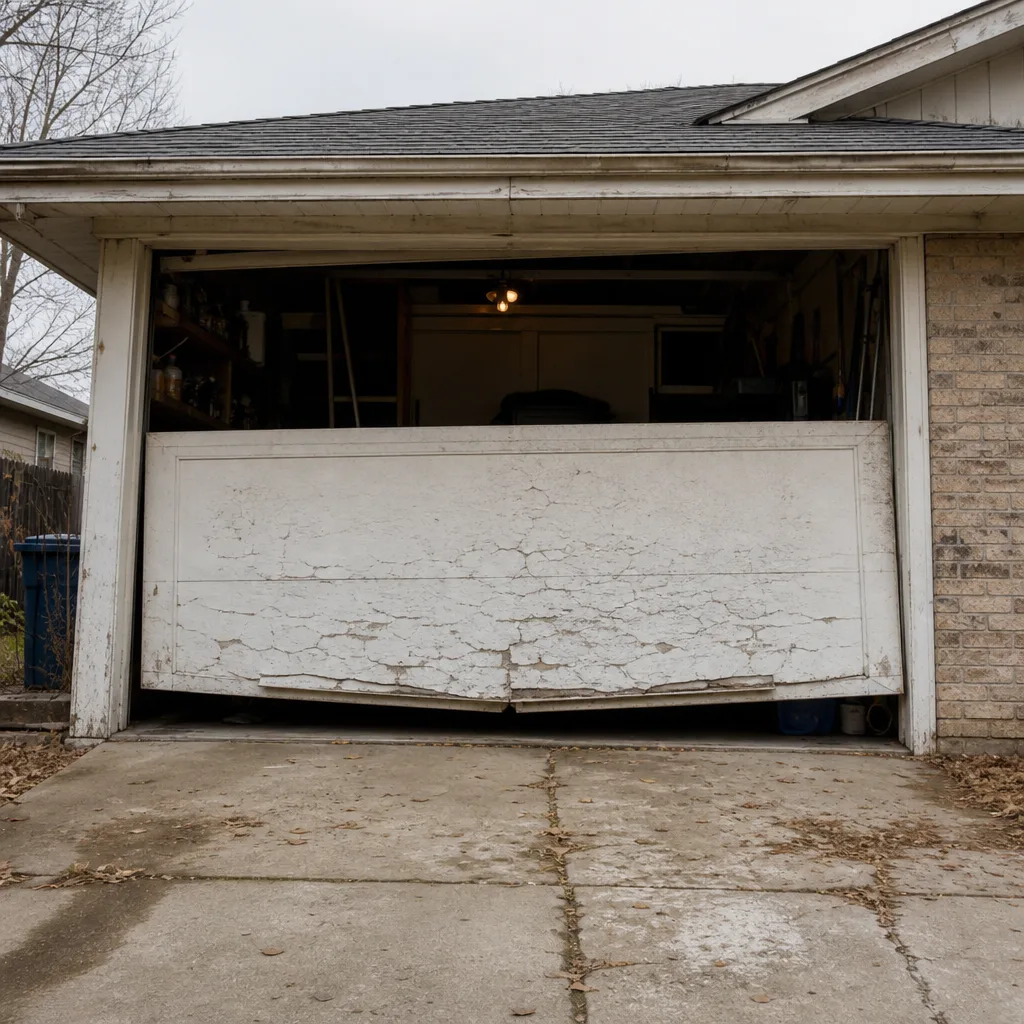 Before
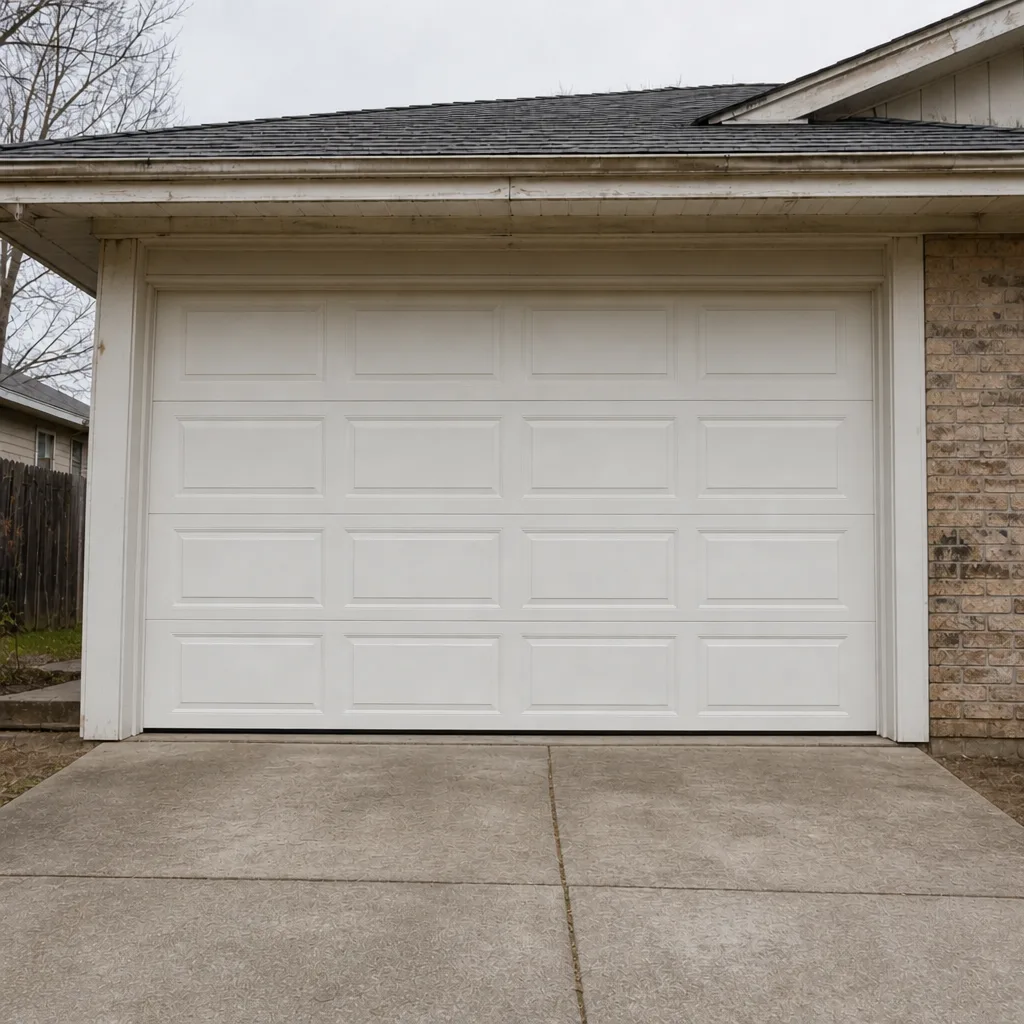 After
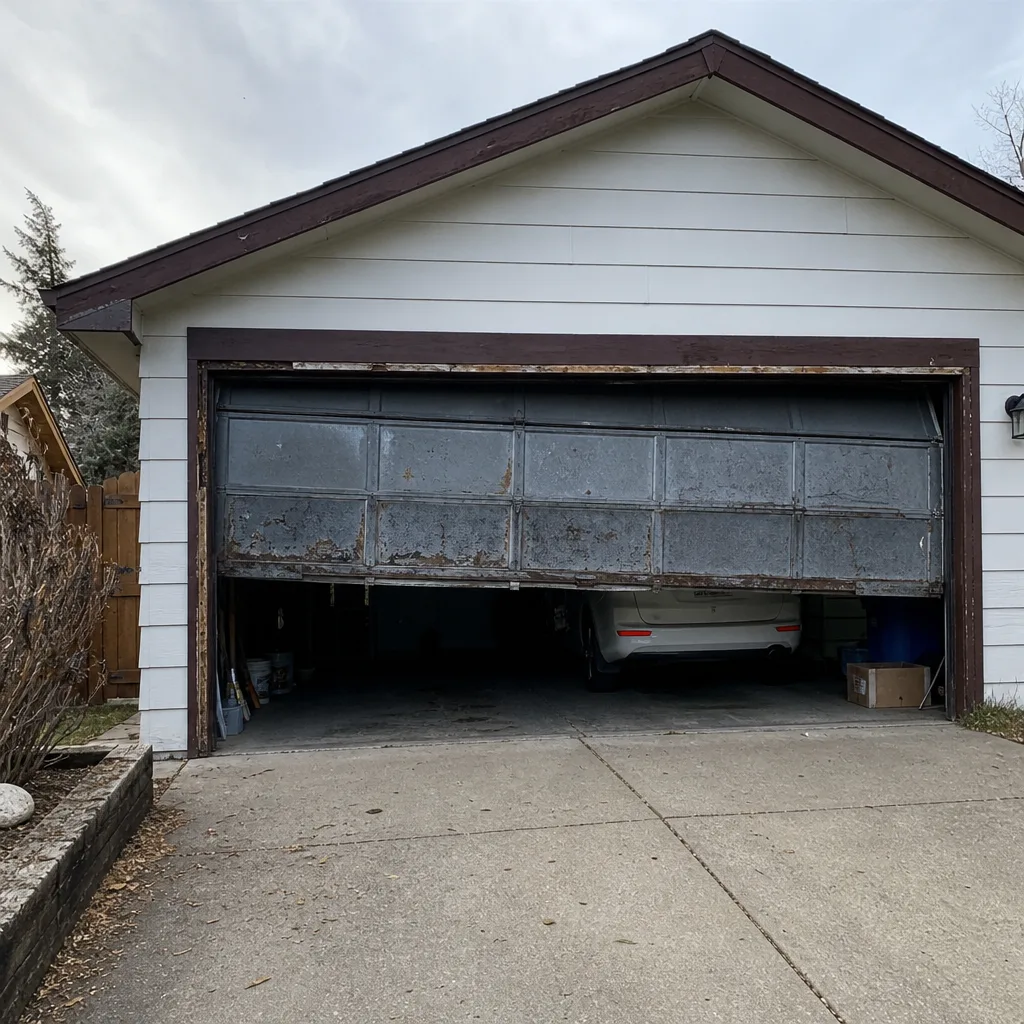 Before
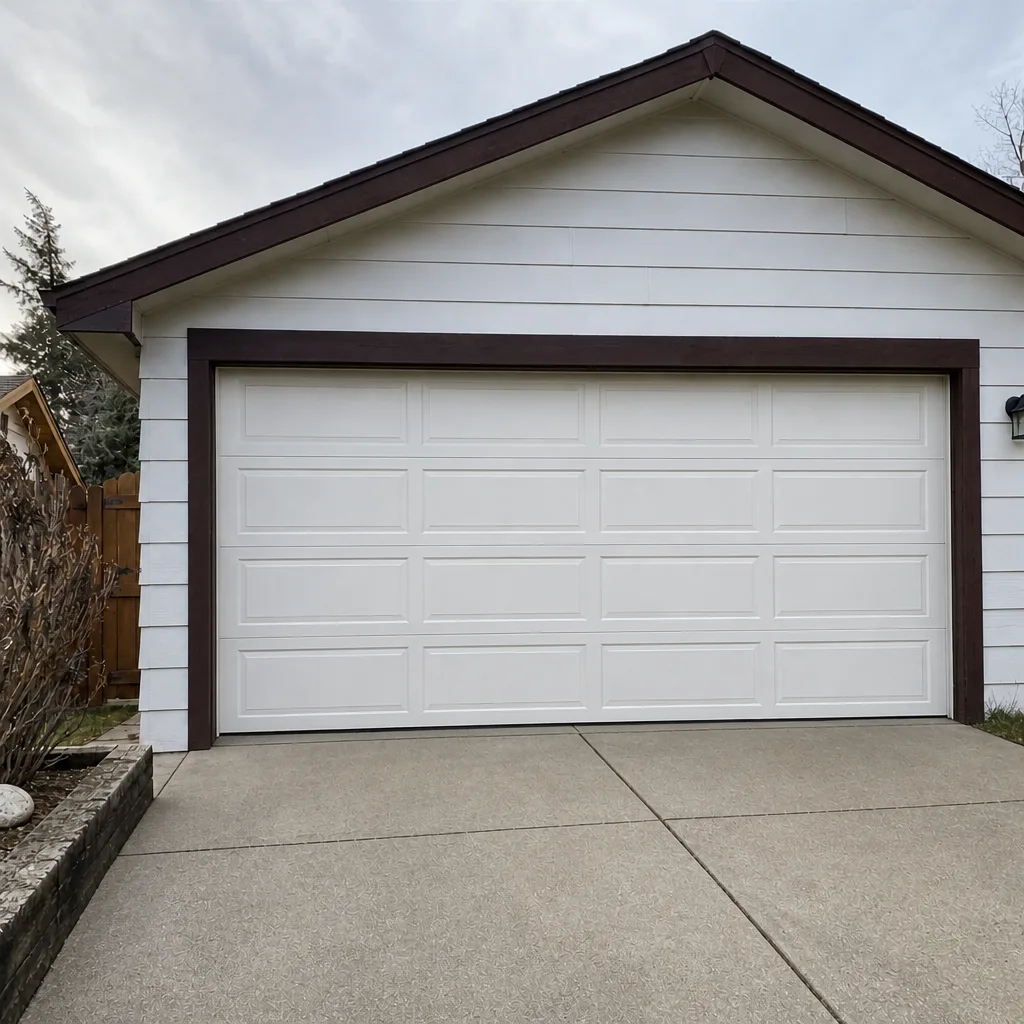 After
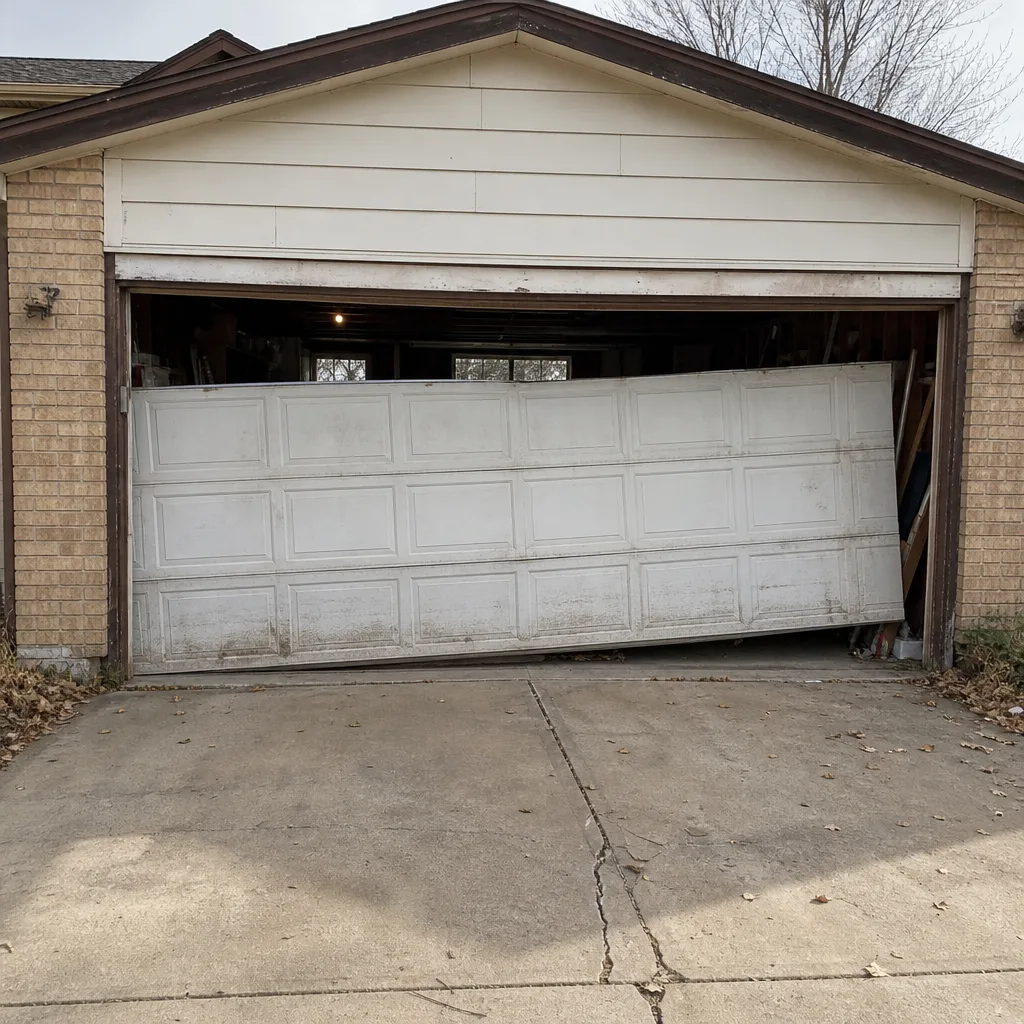 Before
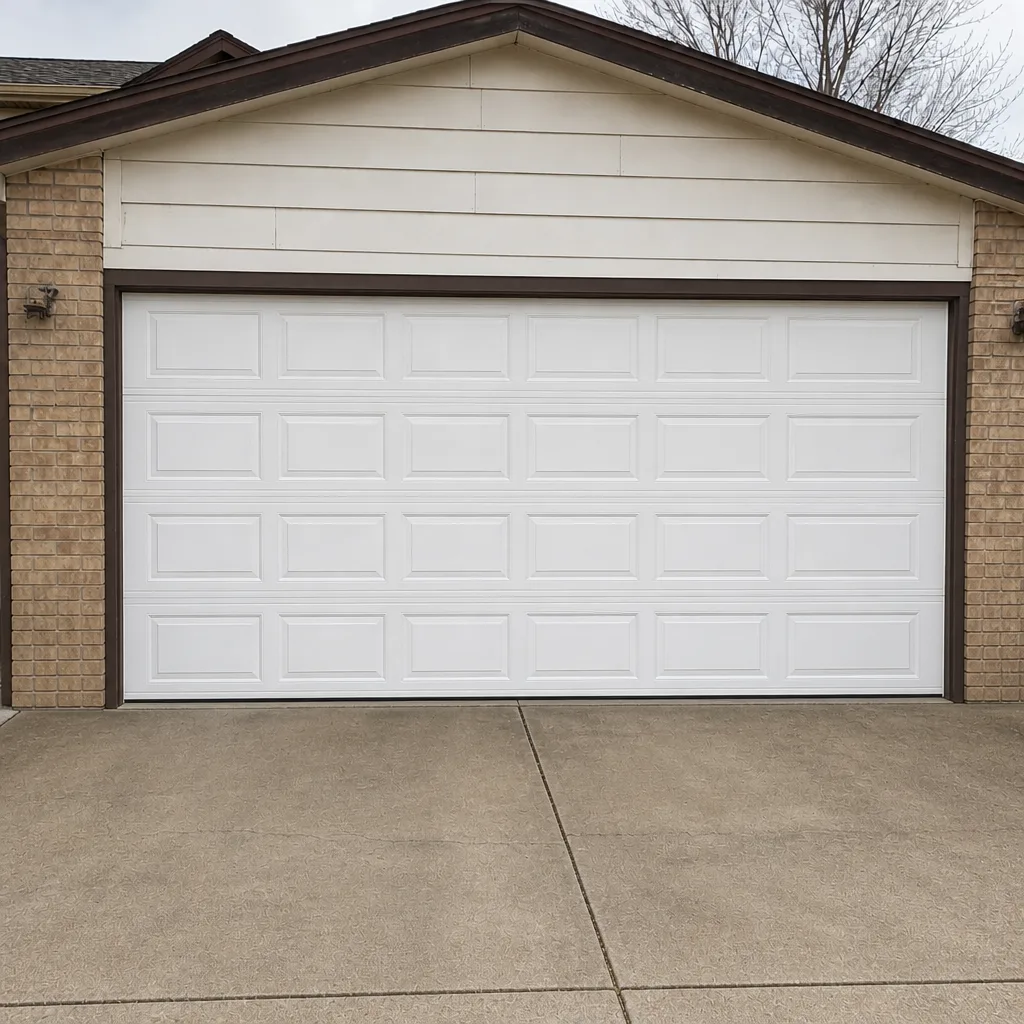 After
When to Call a Professional
If you’ve done the balance test and the door drifts or slams, if you see a gap on one side, if the opener hums without moving the door, or if you hear a loud bang and the door won’t lift, those are the moments to stop troubleshooting and call. Anything involving springs, cables, or opener internals belongs to a trained technician – not because homeowners can’t turn a wrench, but because those components carry stored energy and real injury risk. Centennial Garage Door Repair Pros offers free estimates in Centennial, and we diagnose by brand and system rather than by guesswork. When it won’t open and you can’t wait, emergency service is available. Call (877) 542-4141 and we’ll tell you what’s wrong and what it takes to fix it.
Frequently Asked Questions
A door that reverses before the floor is usually a limit switch out of adjustment, a spring that’s lost tension, or a force setting that’s too sensitive – the safety sensors are the least likely cause. In Centennial’s cold snaps, a door that worked all summer can reverse as the metal stiffens. If cleaning the sensors doesn’t fix it, have a technician check the limit and spring tension before the door starts failing altogether.
Spring repair in Centennial typically runs roughly $180 to $340 for a single spring, and a matched pair is usually replaced together at about twice that, so a pair runs roughly $360 to $680. Prices are estimates, and the written quote you get after a look at the door sets the final price – agreed before any work starts. Call (877) 542-4141 for an exact quote; estimates are free.
For repairs, often yes. Spring, roller, track, and opener repairs are things we can usually book quickly, and when a door won’t close at night or won’t open in the morning, emergency service covers those moments. Installation and replacement are different – those are measured, ordered, and scheduled, and you’ll get a free measure and a written price. Call (877) 542-4141 and we’ll tell you what’s realistic.
No. The price is quoted and agreed before any work starts. A technician diagnoses the actual problem by brand and system, gives you a written estimate, and only then does the work begin. If it turns out to be a different part than expected, you get a new quote before anything is done. Call (877) 542-4141 with what you’re seeing and we’ll get you an estimate.
Grinding is almost always a worn roller, a dry or failing bearing, or a track that’s out of alignment – not the opener itself. In Centennial’s dry air, rollers and bearings wear earlier because lubrication dries out faster. Grease won’t fix a worn roller; it needs replacing. Call (877) 542-4141 for a free estimate and we’ll pin down the part.
The local professionals we connect you with are licensed and insured as their state requires. Our technicians have up to 9 years of experience with garage doors specifically – this is all we work on, not a multi-trade service. We handle repair, spring work, opener repair, installation, and emergency service. Call (877) 542-4141 to book a free estimate.
The Bottom Line
Garage door troubleshooting comes down to one habit: match the symptom to the system before you touch anything. A reversing door is more often a limit switch or spring than a sensor; a grinding door is usually a roller or track; a door that won’t open in the cold is usually tension. Centennial’s elevation and temperature swings make the seasonal symptoms worse and the false diagnoses more common, which is why you check balance, tracks, and force before you call – and leave springs, cables, and opener internals to a pro. Diagnose right, fix once. When you’re ready, we can help.
If this guide points you toward a repair – or your door is stuck and you can’t wait – call Centennial Garage Door Repair Pros at (877) 542-4141 for a free estimate. For a full look at everything we handle, start at Centennial Garage Door Repair Pros.
Written by the team at Centennial Garage Door Repair Pros.