Last updated November 22, 2026
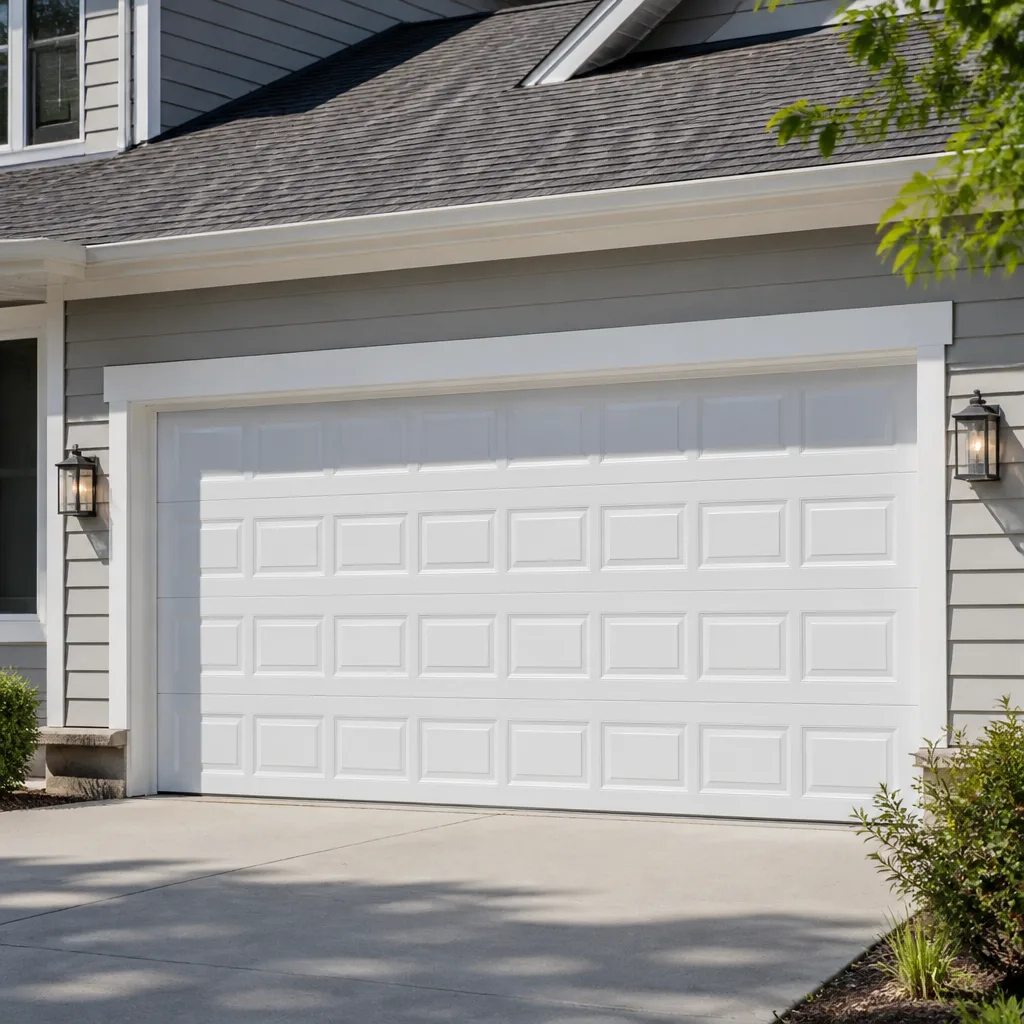 Raised-panel steel
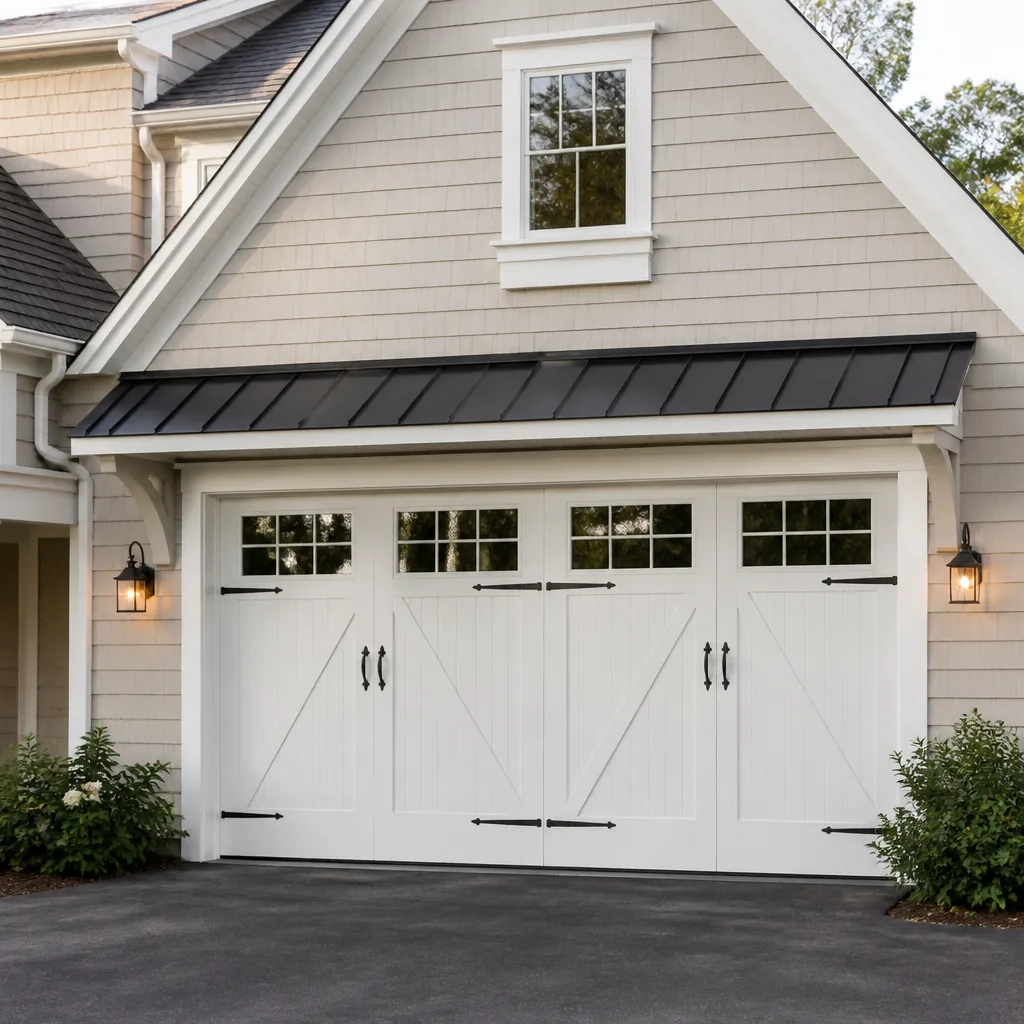 Carriage house
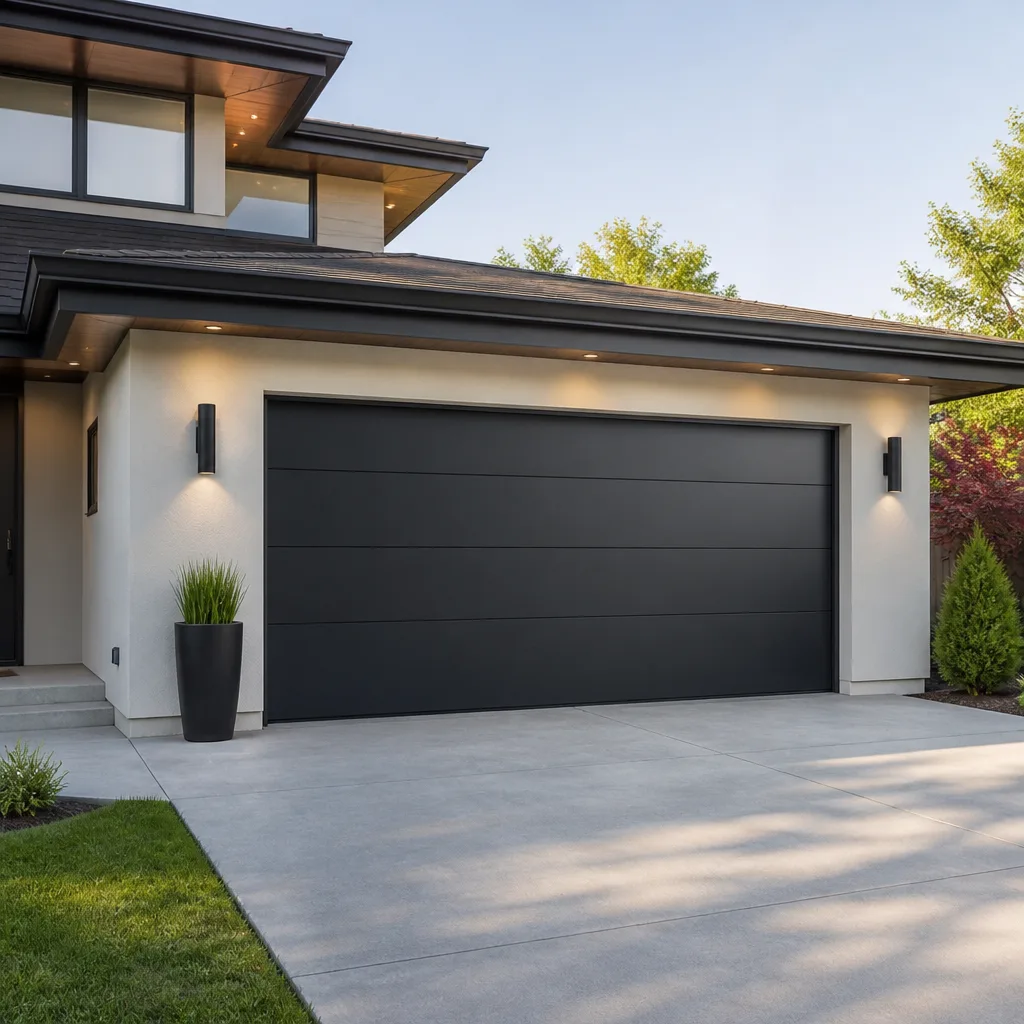 Modern flush
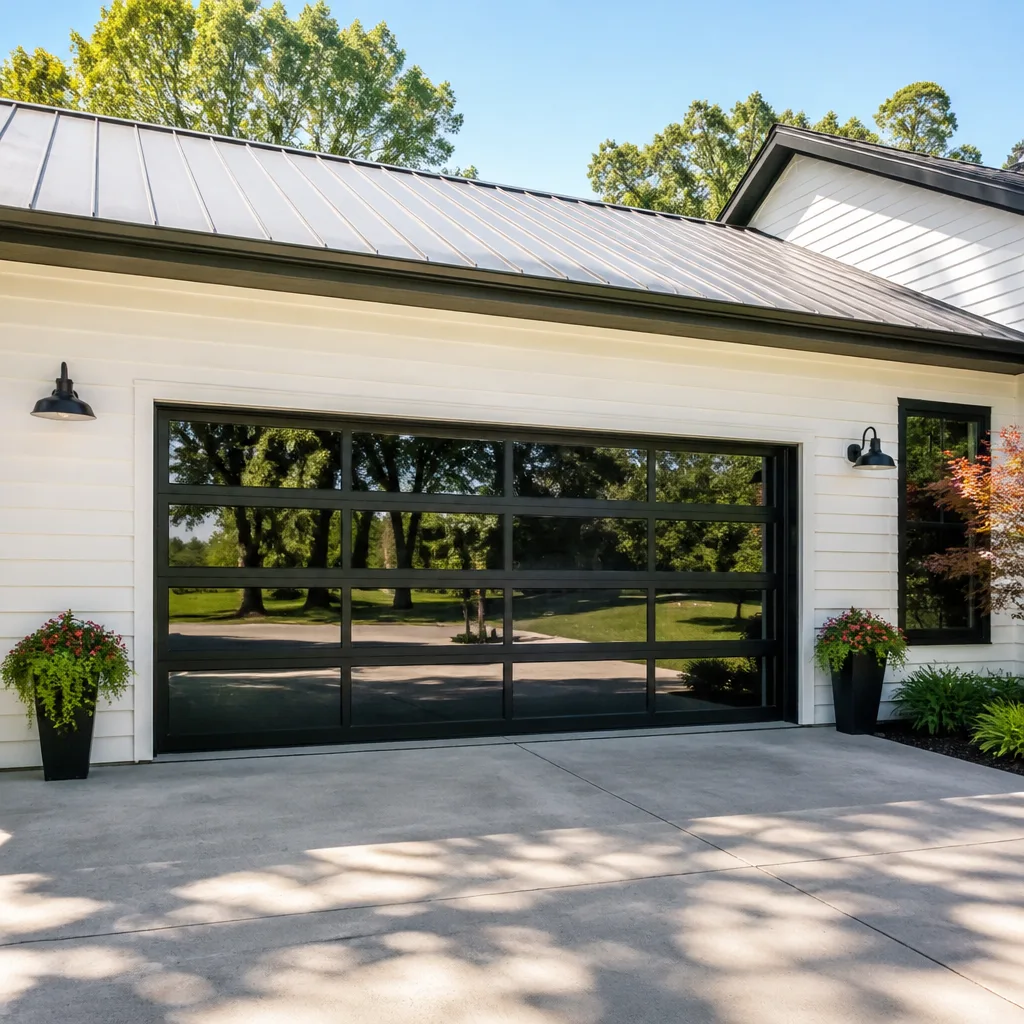 Full-view glass
 LiftMaster openers
 Chamberlain openers
Full 25-point door and opener safety check with every visit - springs, cables, rollers, tracks, and your LiftMaster or Chamberlain opener included
You get a price before we start. It does not change when the pro arrives.
Get your free estimateSeasonal Garage Door Care for Centennial: Year-Round Homeowner’s Guide
Most garage door advice treats the year as four equal seasons. In Centennial it doesn’t work that way. Our calendar has two high-stress periods and two maintenance windows, and almost every failure we get called out for traces back to a homeowner who serviced on a generic spring-and-fall schedule instead of ours. The stress points here are specific: the late fall freeze that drops overnight temperatures below 20°F, and the late spring hail season that hammers south- and west-facing panels. The windows are the mild stretches in between, when adjustments actually hold. This guide walks you through each one, from a September prep list to the two-week post-freeze window when a misaligned track is easiest to correct.
Quick Answer
Seasonal garage door care in Centennial comes down to two stress events and two maintenance windows: prep the bottom seal, lubricant, and opener sensors in September before the first hard freeze, assess panels and tracks after late spring hail, and use the mild months for balance checks and hardware tightening. At 5,900 feet, UV exposure and temperature swings shorten torsion spring life compared to manufacturer averages, so annual inspection matters more here than the service interval on the box suggests.
Styles & brands we work with
- Raised-panel steel
- Carriage house
- Modern flush
- Full-view glass
- LiftMaster openers
- Chamberlain openers
Table of Contents
- Why Centennial’s Calendar Isn’t Four Equal Seasons
- The September Pre-Winter Checklist
- The Two-Week Window After a Hard Freeze
- Late Spring Hail: Cosmetic Denting vs. Structural Damage
- Summer UV, Heat, and Why Springs Wear Faster at Centennial’s Elevation
- What Winterizing a Garage Door Actually Means
- A Month-by-Month Care Calendar for Centennial
- Brand-Specific Care Notes
Why Centennial’s Calendar Isn’t Four Equal Seasons
Centennial sits at 5,900 feet with over 300 days of sunshine a year. That sounds gentle on exterior surfaces, and it is, if you ignore what a UV index that high does to painted steel and vinyl. It doesn’t. Panels fade and chalk faster than they would at a lower elevation, and weatherstrip hardens and cracks well before the manufacturer’s expected lifespan. That’s the first reason a generic four-season schedule doesn’t fit this city.
The second reason is temperature swing. Centennial routinely moves from afternoon highs in the 60s to overnight lows below freezing within the same day during transition months. Metal expands and contracts on that cycle, and every hinge, roller, and track bracket takes the strain. Doors that live through a mild winter without complaint still come out of a hard freeze with a track that’s drifted a quarter inch and a door that grinds on one side.
Here’s the framing that actually helps: think of the year as two stress events with recovery windows on either side.
- Stress event one: the late fall freeze, typically arriving in November. Everything that’s stiff, dry, or loose will fail when the temperature drops below 20°F overnight.
- Window one: late September through October. Cool enough to work comfortably, warm enough that lubricants and seals still move freely.
- Stress event two: late spring hail season, usually May into early June. Panel dents, bent tracks, and impact damage to opener housings.
- Window two: March and April, plus late June. Mild temperatures, stable humidity, and the best conditions for tracking adjustments to hold.
Summer sits between event two and event one, and it’s not passive. High-elevation UV plus heat cycling is when torsion springs accumulate the metal fatigue that shows up as a snap in December. We work on doors across Centennial every week, and the pattern is consistent: the homes that get a September inspection rarely call us in January. The ones that skip it are the ones we see when the door won’t close at 7am and the car is blocked in. If you want the broader repair picture, the garage door repair page covers what each failure type looks like and what it typically runs.
The September Pre-Winter Checklist
September is the single most valuable maintenance window on the Centennial calendar. The goal is simple: get everything that stiffens in cold weather into condition before the first overnight drop below 20°F. Miss it and you’re paying for a January repair call instead of a fall tune-up.
Three tasks matter more than the rest, and they’re the ones most homeowners skip.
- Inspect and replace the bottom seal. The bottom seal is a rubber or vinyl astragal that runs along the bottom edge of the door and compresses against the floor. Summer UV dries it out, and the first hard freeze turns a cracked seal brittle enough to snap off in sections. Run your hand along it in September. If it’s stiff, cracked at the corners, or leaving daylight visible under the door when closed, replace it before the cold sets in. A failing seal also lets cold air, snowmelt, and pests under the door all winter.
- Swap to cold-weather lubricant. This is the step almost nobody does. Standard garage door lubricant thickens as temperatures drop, which drags on the opener motor and stresses the springs. In September, clean the old lubricant off the hinges, rollers, and torsion tube with a rag, then apply a lubricant rated for cold temperatures. Your door will run quieter in January, and your opener will last longer.
- Test the opener’s safety reverse and check the sensor alignment. The photoelectric safety sensors at the bottom of the tracks are what stop the door from closing on a person or pet. Cold weather shrinks the brackets holding them, and a sensor that was aligned in July can drift out of line by November. With the door open, press the wall control to close and wave an object through the beam. The door should reverse immediately. If it doesn’t, check that both sensor LEDs are solid (not blinking) and that the lenses are clean. A blinking LED almost always means misalignment or debris, not a dead sensor.
Beyond those three, run through the basics: tug the manual release to confirm it operates smoothly, listen for grinding or popping as the door travels, and look at the spring (torsion or extension) for gaps, rust streaks, or sagging. If you’re not sure what you’re looking at, an inspection is worth more than a guess. Our technicians have up to 9 years of experience and know what a spring on the edge of failure looks like before it snaps.
One more Centennial-specific note: don’t put this off until the first cold snap shows up in the forecast. By then every garage door company in the south metro is booked out, and you’ll be waiting days for a seal replacement that would have taken twenty minutes in September. Schedule the inspection while the weather is still mild.
The Two-Week Window After a Hard Freeze
A hard freeze in Centennial, meaning overnight lows below 20°F for several consecutive nights, does something specific to the metal in your garage door system. Steel tracks, hinges, and the torsion tube all contract. Because the hardware on each side of the door doesn’t contract at exactly the same rate, gaps open where there weren’t any, and the door’s alignment drifts.
What you’ll notice, usually within a few days of the freeze breaking:
- The door binds or scrapes on one side as it travels up or down.
- A gap appears between one roller and the track, or a roller starts popping out.
- The door sits unevenly at the bottom, with one corner touching the floor and the other not.
- The opener strains or the motor sounds louder than it did in the fall.
- A hinge bracket has visibly pulled away from the panel.
These are expansion and contraction symptoms, not failures. Most of them correct with a track adjustment and a hinge tightening, and the fix takes minutes when it’s caught early. The two-week window after the freeze breaks is when a technician can make the adjustment and have it hold, because the metal has stabilized but hasn’t yet re-expanded with spring warmth.
Wait longer and the adjustment is harder to make stick, because the metal is on the move again. More importantly, a misaligned track puts uneven load on the rollers and the torsion system. Left alone for a season, a quarter-inch of drift turns into worn rollers, a stretched spring, and a much larger repair. If your door started acting up after that first hard cold snap, this is the window to act.
Springs are the highest-stakes repair on any garage door, and this is the season when they fail. If your door won’t open at all after a cold night, don’t force it. The spring may already be broken, and running the opener against a broken spring can damage the motor, bend the door panel, or cause the door to come down uncontrolled. Call for help and leave it. That’s exactly the situation garage door opener repair calls are for, and it’s also when emergency service earns its keep.
Safety note: torsion springs, extension springs, and their cables are under extreme tension, and a DIY repair on them is genuinely dangerous. We don’t recommend adjusting or replacing a spring yourself. That goes double in cold weather, when the metal is more brittle and the stored energy is the same as always. Only a trained technician should touch the spring system.
Late Spring Hail: Cosmetic Denting vs. Structural Damage
Hail season in Centennial runs late spring, usually May into early June, and the storms tend to come from the west and southwest. That means south- and west-facing garage doors take the worst of it. After a hailstorm, the question every homeowner asks is whether the denting matters beyond appearance. Sometimes it doesn’t. Sometimes it does, and the difference comes down to what the impact did to the panel’s structural integrity and to the door’s balance.
Here’s how to tell them apart.
Cosmetic denting
- Shallow dimples or dings on the face of the panel, with no creasing.
- No visible gap between panels after the storm.
- The door still travels smoothly and closes evenly.
- The denting is confined to the outer skin, not the reinforcing ribs or the panel edges.
Cosmetic damage affects how the door looks, not how it works. On a steel door from Clopay or Amarr, shallow denting is often fillable or panel-replaceable without replacing the whole door. It’s worth a look, but it’s not an emergency.
Structural damage
- Creased or folded panel edges, or a panel that has visibly bowed.
- A gap or separation between two panels.
- Denting that reaches the hinge brackets or the panel stiffeners.
- The door now sits unevenly or binds in one spot as it travels.
- Hailstones large enough to dent an opener housing or bend a track.
Any of these affect more than appearance. A bowed or creased panel changes the door’s weight distribution, which puts extra load on the spring and the opener. A separated panel can let water in and accelerates corrosion along the seam. A bent track causes the door to grind and wear out rollers. These are structural repairs, and they need a professional assessment before the damage spreads to the spring system or the opener.
One practical Centennial tip: after a big hailstorm, walk around the front of the garage with a phone camera and take photos of each panel in good light. It gives you a record of the damage and helps any technician understand exactly what happened. If you’re weighing repair against replacement, the garage door installation page lays out the factors we walk homeowners through. Most hail damage is repaired, not replaced, but a badly creased door with a tired spring sometimes flips the math.
Summer UV, Heat, and Why Springs Wear Faster at Centennial’s Elevation
Torsion spring life is usually quoted in cycles, and manufacturers base those numbers on average conditions. Centennial isn’t average. At 5,900 feet, UV exposure is significantly stronger than at sea level, and the daily temperature swing is wider than it is in Denver proper. The effect on a torsion spring is cumulative metal fatigue that runs faster here than the manufacturer’s service interval suggests.
What that means practically: a spring that a manufacturer expects to last a certain number of cycles may reach its failure point sooner in a Centennial garage, especially on a door that faces south or west. Summer is when the fatigue accumulates, because the heat cycling between afternoon highs and cool nights is hardest on the spring, and the UV exposure degrades the finish on the torsion tube and the panels at the same time. You don’t see the fatigue until the spring snaps, usually in winter, when cold makes the metal least forgiving.
This is why we tell Centennial homeowners to treat an annual spring inspection as a summer task, not a winter one. A technician can measure spring tension and look for tell-tales like a rust line, a slight gap in the winding, or uneven tension across a matched pair. Catching a spring at 80% of its life and replacing it on schedule is far cheaper than an emergency call in January. Spring replacement pricing is per spring, and a matched pair is typically replaced together, so the pair costs roughly double a single spring. For current ranges in this market, that’s the conversation to have on the phone, not after the door is stuck.
UV affects more than the spring. Vinyl weatherstrip along the sides and top hardens and cracks in the summer sun, and painted steel panels chalk and fade. If you have a Craftsman or Chamberlain opener, the summer heat is also hard on the motor’s internal components and the logic board. None of it fails suddenly in August. It’s the accumulated summer damage that shows up as a spring snap or an opener failure the following winter.
What Winterizing a Garage Door Actually Means
“Winterizing” gets sold as a package with a lot of bells on it, and much of it doesn’t do anything mechanical. It’s worth separating what actually protects the door from what just adds cost.
What winterizing actually means, mechanically:
- Replacing a stiff or cracked bottom seal so cold air and moisture stay outside.
- Switching to a cold-rated lubricant so hinges and rollers don’t drag in the cold.
- Confirming the opener’s safety reverse and sensor alignment so the door doesn’t reverse on its own in cold weather.
- Checking spring tension and looking for signs of imminent failure.
- Tightening loose hardware so the door doesn’t rattle itself apart through the freeze-thaw cycle.
What winterizing doesn’t mean:
- It doesn’t mean adding insulation to the door. Insulation affects the temperature inside the garage; it doesn’t extend the life of any mechanical component.
- It doesn’t mean “tuning up” a torsion spring. Springs aren’t tuned. They’re either within tolerance or they need replacing. Anyone who wants to “adjust” a spring without measuring is guessing.
- It doesn’t mean applying a heavy lubricant to everything. Over-lubricating attracts grit and can make the door worse. The right amount in the right places is what matters.
- It doesn’t mean the door needs a full service every single season. Two well-timed checks a year, in fall and early summer, cover the important work.
We see a lot of unnecessary service calls in Centennial from homeowners who bought a “winter package” that added insulation and called it done, then got a spring failure in January anyway. The money is better spent on the seal, the lubricant, and a real inspection of the moving parts. Same door, fixed right, means knowing what actually matters on your door, not applying a generic package to it.
A Month-by-Month Care Calendar for Centennial
Here’s the schedule we’d suggest for a Centennial home. It isn’t a rigid prescription. Doors vary, and an older door with more cycles on it may need more attention than a new one. But this is the rhythm that lines up with our climate.
- March and April. Post-winter inspection. Check tracking, tighten hardware, listen for grinding. This is the best time to make a track adjustment that will hold, because the temperature is moderate and stable. Also a good time to clean and lubricate hinges and rollers after the winter.
- May and early June. Hail watch. After any significant storm, inspect panels, tracks, and the opener housing for impact damage. Photograph what you find. Address any creasing or binding quickly, before it spreads to the spring system.
- Late June. Mid-year inspection. Focus on spring condition, weatherstrip, and opener performance. Catch UV damage to the weatherstrip before the summer finishes it off.
- July and August. Nothing mandatory, but a good time for a balance check and a listen. If the door is getting louder, that’s the early signal that something needs attention before fall.
- September. The big one. Bottom seal, lubricant swap, safety sensor check, spring inspection. Everything in this section is your pre-winter defense.
- October. Follow-up. If anything was flagged in September, get it fixed before the first hard freeze. Track adjustments made now hold better than ones made in December.
- November through February. Monitor, don’t service. Listen for new noises, watch for binding on cold mornings, and don’t force a door that won’t open. If the door fails, call for emergency service. If it’s acting up after the first hard freeze, book a track adjustment within two weeks.
The one thing this calendar assumes is that you’ll spend five minutes in March and September actually looking at the door rather than guessing. A visual walk-around catches most problems. If you want the inspection done properly, that’s what the full-service team around Centennial is here for. One call covers it.
Brand-Specific Care Notes
Garage doors and openers are not interchangeable, and a technician who knows the brand can read the warning signs faster than one who doesn’t. We’re factory-familiar with 8 leading brands, including LiftMaster, Chamberlain, Genie, Clopay, Amarr, Wayne Dalton, Craftsman, and Raynor. That matters here because each brand ages differently under Centennial’s conditions.
LiftMaster and Chamberlain openers share a lot of engineering. Their safety sensors are sensitive to cold-weather misalignment, and the wall controls generally hold up well, but the logic board is the part most likely to fail after a summer of heat cycling. If your LiftMaster or Chamberlain opener behaves erratically in late summer, it’s worth checking before winter rather than waiting.
Craftsman openers are common on older Centennial homes. They’re reliable, but the internal gears wear with age and use, and the symptoms show up as a grinding or rattling noise that gets worse in cold weather. Catching that in the fall is much cheaper than replacing a stripped gear in January.
Raynor doors are frequently installed on newer builds in this area. Their panel systems and hinge brackets are solid, but the finish on steel panels is vulnerable to UV chalking at this elevation, and hail denting on the flat panel faces is worth inspecting carefully after a spring storm.
Clopay and Amarr doors are among the most common steel doors we see. Their bottom seals and side weatherstrip wear faster than the panels themselves at Centennial’s elevation, so September seal replacement is often the highest-value task on the list.
Whatever the brand, the principle is the same: diagnose by how the specific system behaves, not by guesswork. If your door or opener is doing something brand-specific that doesn’t match the general symptoms, that’s worth describing when you call, because it narrows down the problem quickly.
Common Mistakes to Avoid
- Servicing on a generic four-season schedule. September and late spring are what matter in Centennial. A spring tune-up done in April and a fall tune-up done in November miss the two windows that actually protect the door.
- Skipping the September lubricant swap. Standard lubricant thickens below freezing and drags on the opener motor. One swap in September saves a much bigger repair later.
- Ignoring the bottom seal until it snaps. Centennial’s UV index dries out vinyl and rubber faster than the manufacturer’s lifespan assumes. Check it every September, not every other year.
- Assuming hail denting is always cosmetic. Shallow dimples on a flat panel usually are. Creasing, panel separation, bent tracks, and doors that now travel unevenly are not, and they need a professional look before the problem spreads.
- Waiting until spring to fix a post-freeze track issue. The two-week window after a freeze is when track realignment holds best. By spring, the metal is expanding again and the adjustment is harder to make stick.
- Forcing a door that won’t open on a cold morning. If the spring is broken, running the opener can bend the door, damage the motor, or drop the door unexpectedly. Stop and call.
- Buying a “winterizing” package that only adds insulation. Insulation doesn’t extend the life of the mechanics. Spend the money on the seal, the lubricant, and a real inspection instead.
See the difference
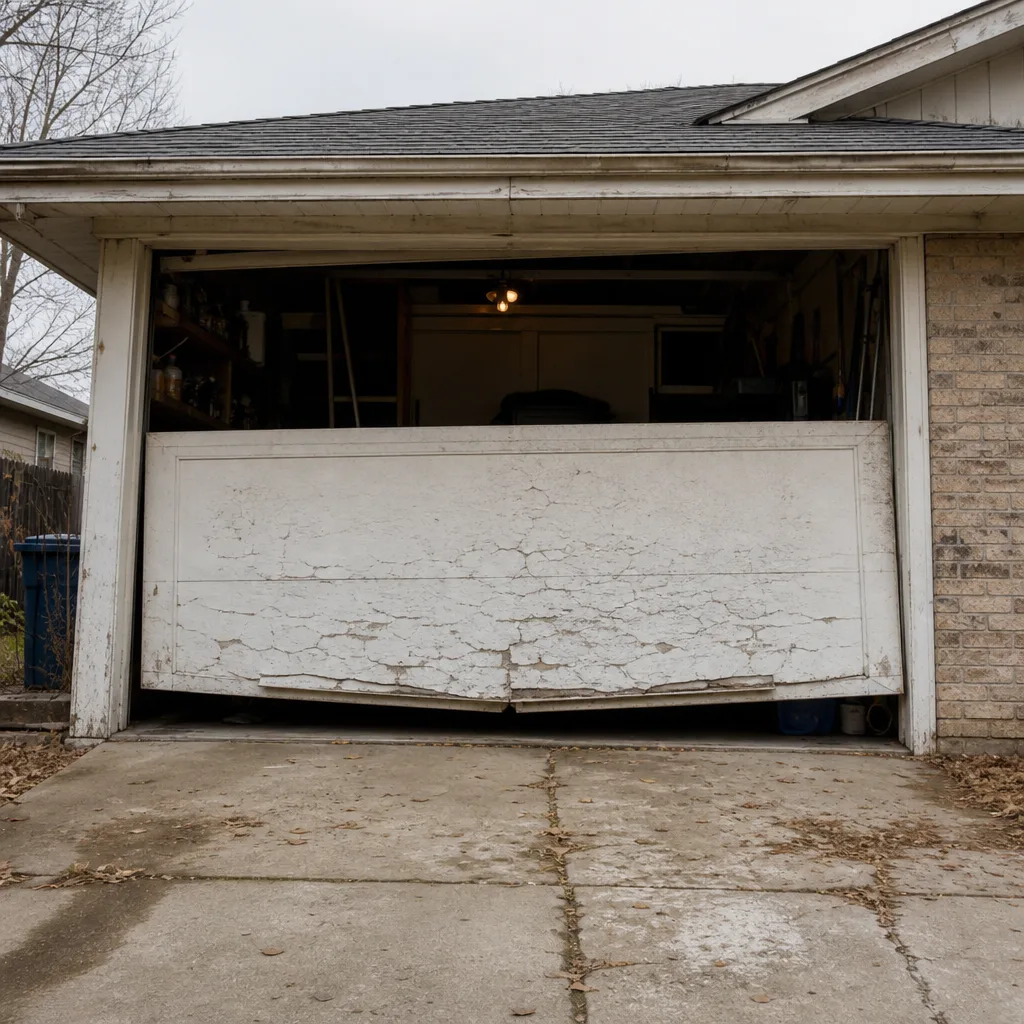 Before
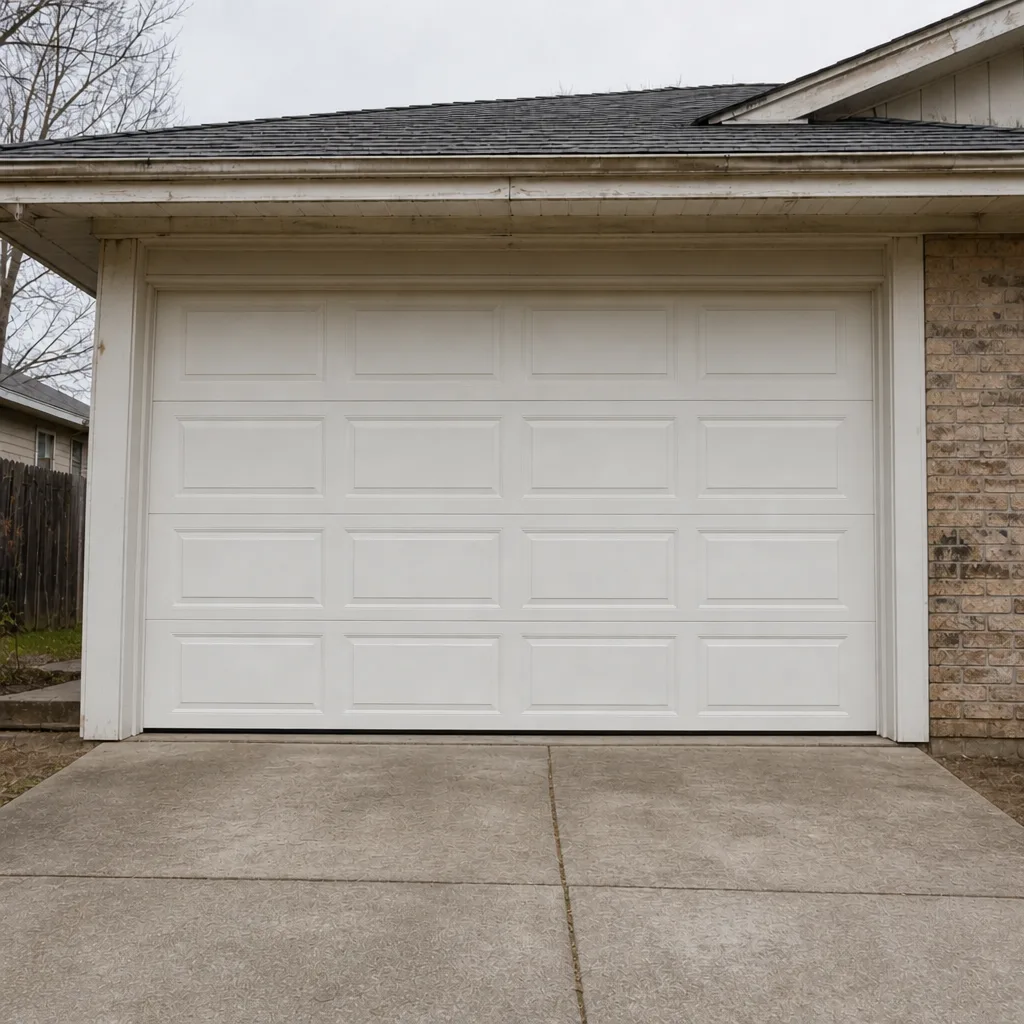 After
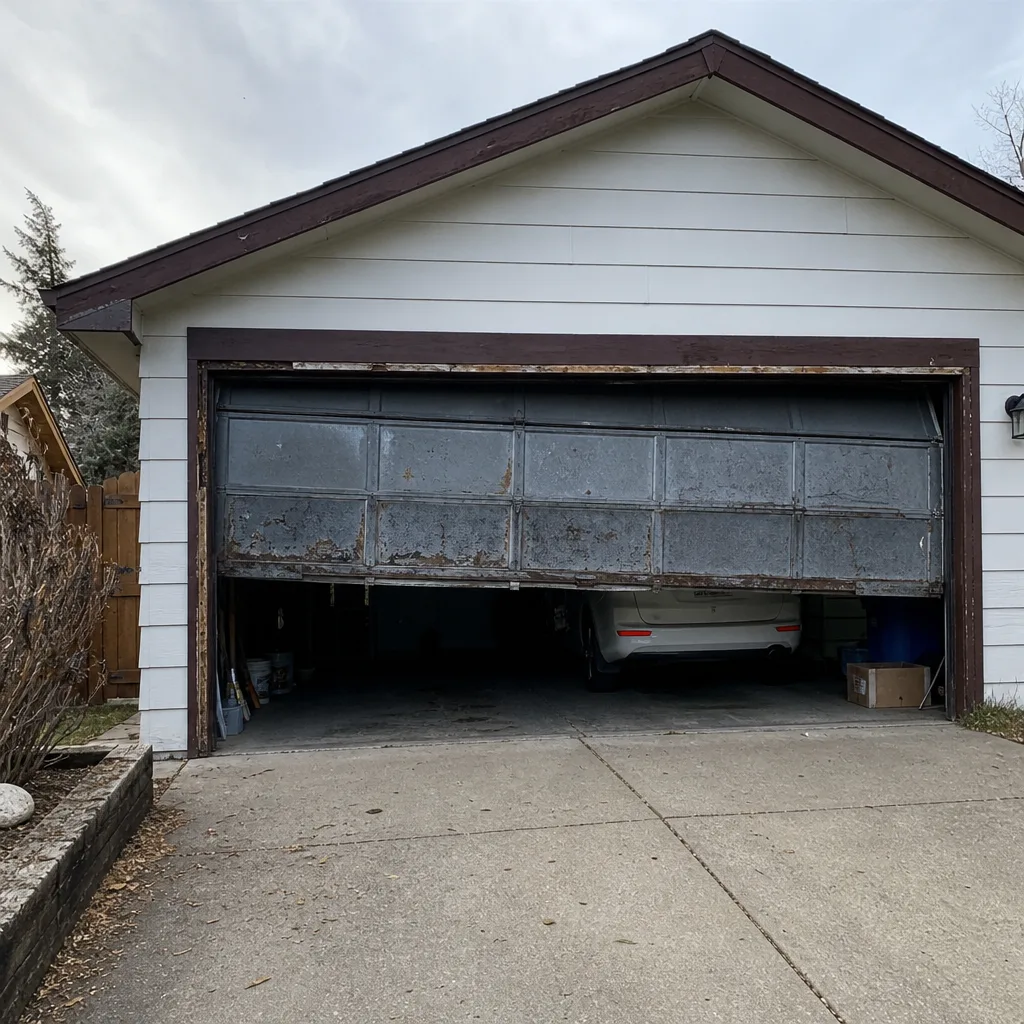 Before
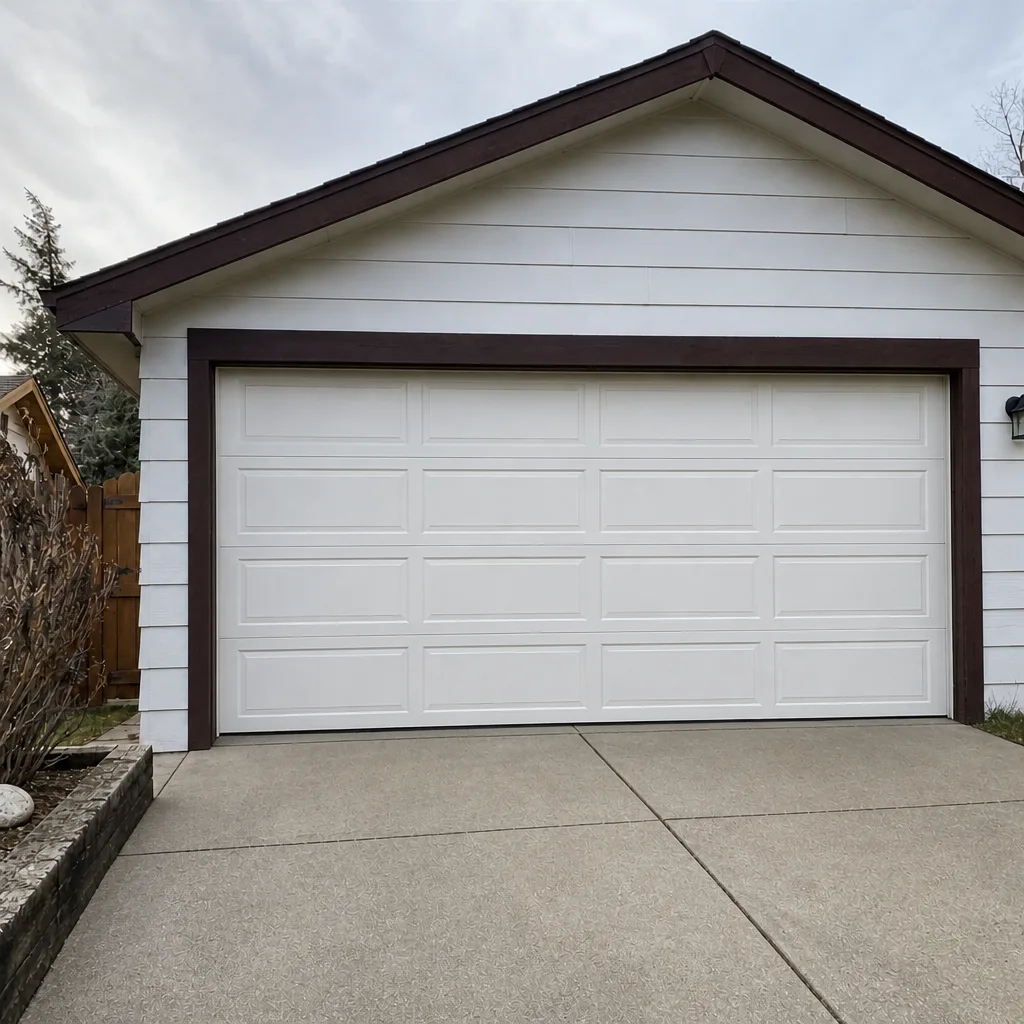 After
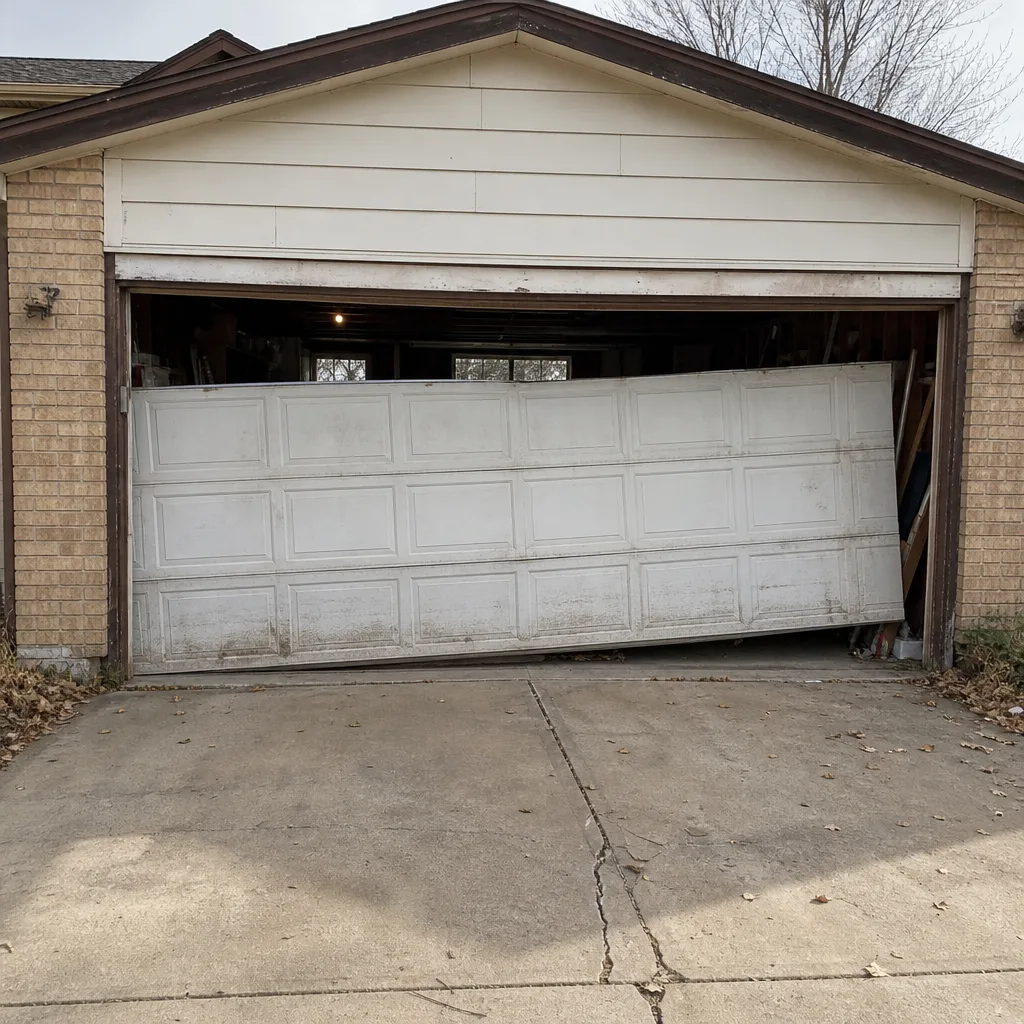 Before
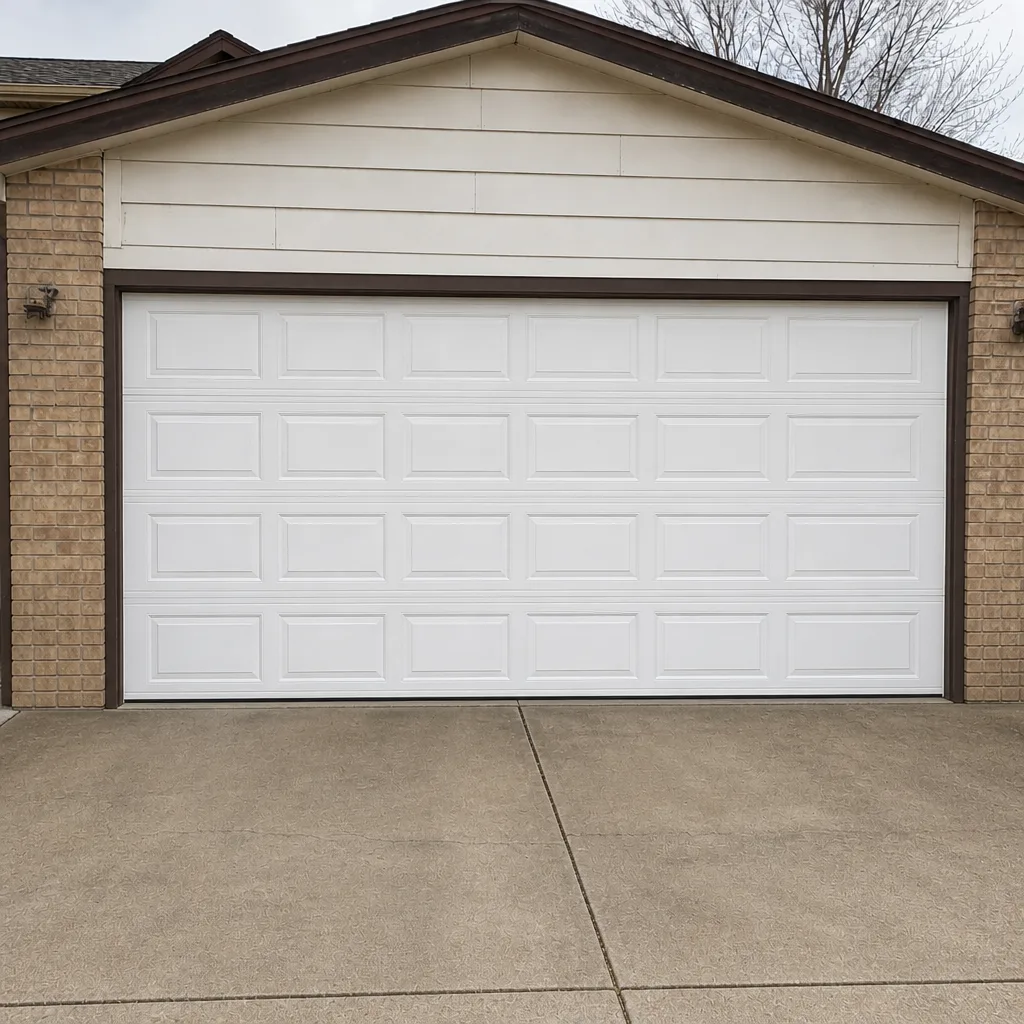 After
When to Call a Professional
Some maintenance is worth doing yourself: wiping down the tracks, cleaning the sensors, tightening a loose screw on a bracket. The moment the task involves the spring, cables, or the structural integrity of the door, stop. Torsion and extension springs store tremendous energy, and a mistake with them is genuinely dangerous. Call a professional if you see a spring with a visible gap, if the door is unbalanced, if a track has bent, if a panel has separated after a hail storm, or if the door won’t open or close at all.
In Centennial, September and the two weeks after a hard freeze are the two busiest times of year for garage door calls. Getting on the schedule early is worth it. Centennial Garage Door Repair Pros offers free estimates in Centennial, and we cover spring repair, opener repair, and emergency service under one roof. Call (877) 542-4141 and we’ll get you on the calendar. The price is quoted and agreed before any work starts, so there are no surprises on the invoice. Our technicians have up to 9 years of experience, and they work on the 8 major brands that dominate Centennial garages.
Frequently Asked Questions
Twice a year, ideally in September and in late spring. Centennial’s two high-stress periods are the late fall freeze and the late spring hail season, so those are the windows to prepare for. An annual inspection is the minimum, but two well-timed checks catch most problems before they become repairs.
Because of the elevation and temperature swings. At 5,900 feet, UV exposure is stronger and the daily temperature swing is wider, and both accelerate metal fatigue in torsion springs. That means spring life runs shorter here than the manufacturer’s cycle count suggests. Call (877) 542-4141 for a spring inspection and a written price.
Yes, when it creases panel edges, separates panels, bends the track, or changes how the door travels. Shallow dimples on a flat panel are usually cosmetic. Creasing or a door that now binds as it opens is structural and needs a professional assessment. Our technicians can tell the difference in person.
Not if you prep in September. The fall freeze catches doors with stiff seals, thick lubricant, and worn springs. A September inspection catches those problems before the cold arrives. If your door starts binding after the freeze breaks, book a track adjustment within two weeks, when the fix holds best.
No. Torsion and extension springs are under extreme tension, and a DIY repair on them is genuinely dangerous. Only a trained technician should work on the spring or cable system. Call (877) 542-4141 for spring repair; estimates are free.
A bottom seal replacement, a cold-weather lubricant swap, a safety reverse check, a spring inspection, and tightening loose hardware. It doesn’t involve adding insulation or “tuning” a spring. Any service that skips the moving parts and only addresses appearance is missing the point. Call us for a proper pre-winter inspection in Centennial.
The Bottom Line
Centennial doesn’t have four equal seasons for garage door care. It has two stress periods, the late fall freeze and the late spring hail season, and two maintenance windows on either side. Prep the bottom seal, lubricant, and sensors in September. Assess panels and tracks after hail. Book a track adjustment within two weeks of any hard freeze. And treat summer as the time when springs accumulate fatigue, not the time to relax. If you structure care around that reality, most of the failures we see in this city never happen. If you’d rather have the inspection done right, call Centennial Garage Door Repair Pros at (877) 542-4141 for a free estimate.
Written by the team at Centennial Garage Door Repair Pros.